

Work Context
Work context is the information needed to understand, decide, and act correctly. It connects every task with its purpose, owner, documents, discussions, decisions, deadlines, dependencies, and history.
KanBo is a platform for work context. It keeps everything related to a work item in one structured place, so people, AI assistants, LLMs, and agents can work with the same operational reality — not scattered fragments from emails, chats, meetings, folders, and spreadsheets.
With KanBo, every Card becomes a complete context container: what needs to be done, who is responsible, what information is available, what has already happened, what decisions were made, and what should happen next.
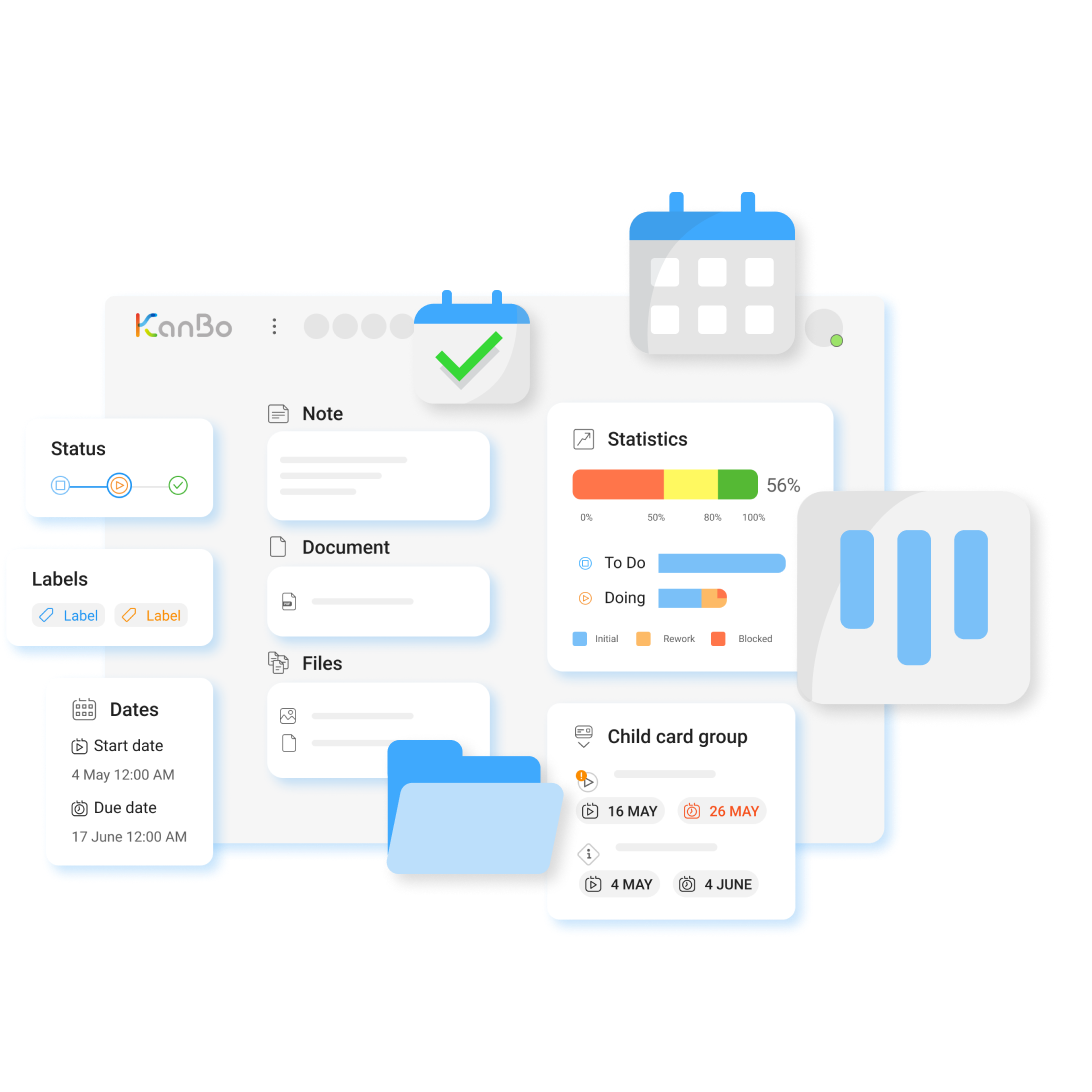
Context is the foundation of coordinated human and AI work
Work cannot be coordinated well when information is separated from the task. A document in one folder, a decision in a meeting, a question in chat, and a deadline in another system create fragmented context.
For people, this creates confusion and repeated explanations. For AI, it creates an even bigger problem: without reliable context, an LLM or agent cannot understand the purpose, constraints, history, dependencies, or responsibility behind the work.
KanBo keeps work and context together. This allows humans and AI to collaborate around structured, traceable, and decision-ready work information.
Manager’s question
Why was this decision made, and can people or AI understand the reasoning behind it?
KanBo keeps decisions close to the work they affect. Comments, notes, documents, mentions, status changes, and activity history show how a Card developed over time and why certain actions were taken.
For people, this reduces repeated explanations and dependency on memory. For AI, it provides the reasoning trail needed to summarize, classify, recommend next steps, or prepare decision support without guessing from incomplete information.
This connects strongly with F. A. Hayek’s Nobel-recognized insight that knowledge in society is dispersed and cannot be fully held by one central mind. In organizations, relevant work knowledge is also dispersed across people, documents, systems, and situations. KanBo helps collect that dispersed knowledge around the work item where it is needed.
Benefit: Decisions become understandable, traceable, and reusable by both people and AI.
Manager’s question
Are the right documents connected to the right work, so people and AI use the correct information?
KanBo connects documents directly with Cards, Spaces, and processes. Specifications, contracts, reports, drawings, presentations, approvals, and working files stay attached to the work they support.
For people, this reduces search time and version confusion. For AI, document context is essential: the model needs to know which files belong to which task, decision, approval, customer case, project phase, or process step.
Without document context, AI may summarize the wrong file, miss the relevant version, or produce an answer disconnected from the actual work.
Benefit: Documents become usable work context instead of isolated files.
Manager’s question
Who is involved, who is responsible, and how should humans and AI cooperate around this work?
KanBo connects work with Responsible Persons, Co-Workers, roles, mentions, comments, notifications, permissions, and activity streams. This shows who owns the work, who contributes, who reviews, and who needs to stay informed.
For people, this creates clear collaboration. For AI agents, it creates boundaries: who should be notified, who can decide, who must approve, and where human confirmation is required.
This connects with transaction-cost economics. Ronald Coase showed that institutional structures matter because coordination is not free; real organizations need mechanisms that reduce search, negotiation, monitoring, and handoff costs. KanBo reduces these costs by making collaboration roles explicit inside the work context.
Benefit: Human-AI collaboration becomes structured, role-aware, and easier to govern.
Manager’s question
Where is this work in the process, what depends on it, and what can AI safely do next?
KanBo connects every Card with statuses, dates, blockers, checklists, relations, dependencies, labels, custom fields, and history. This shows not only what the task is, but also where it stands in the larger process.
For people, process context makes next steps clear. For AI, process context defines what kind of assistance is appropriate: summarize, draft, classify, remind, detect missing information, suggest next steps, or escalate a blocker.
Oliver Williamson’s Nobel-recognized work on economic governance is useful here: organizations need governance mechanisms for transactions and cooperation where contracts and rules cannot specify every detail. In KanBo, process context provides that governance layer for daily work, including AI-supported execution.
Benefit: Work moves forward with clearer next steps, safer AI assistance, and better control over dependencies.
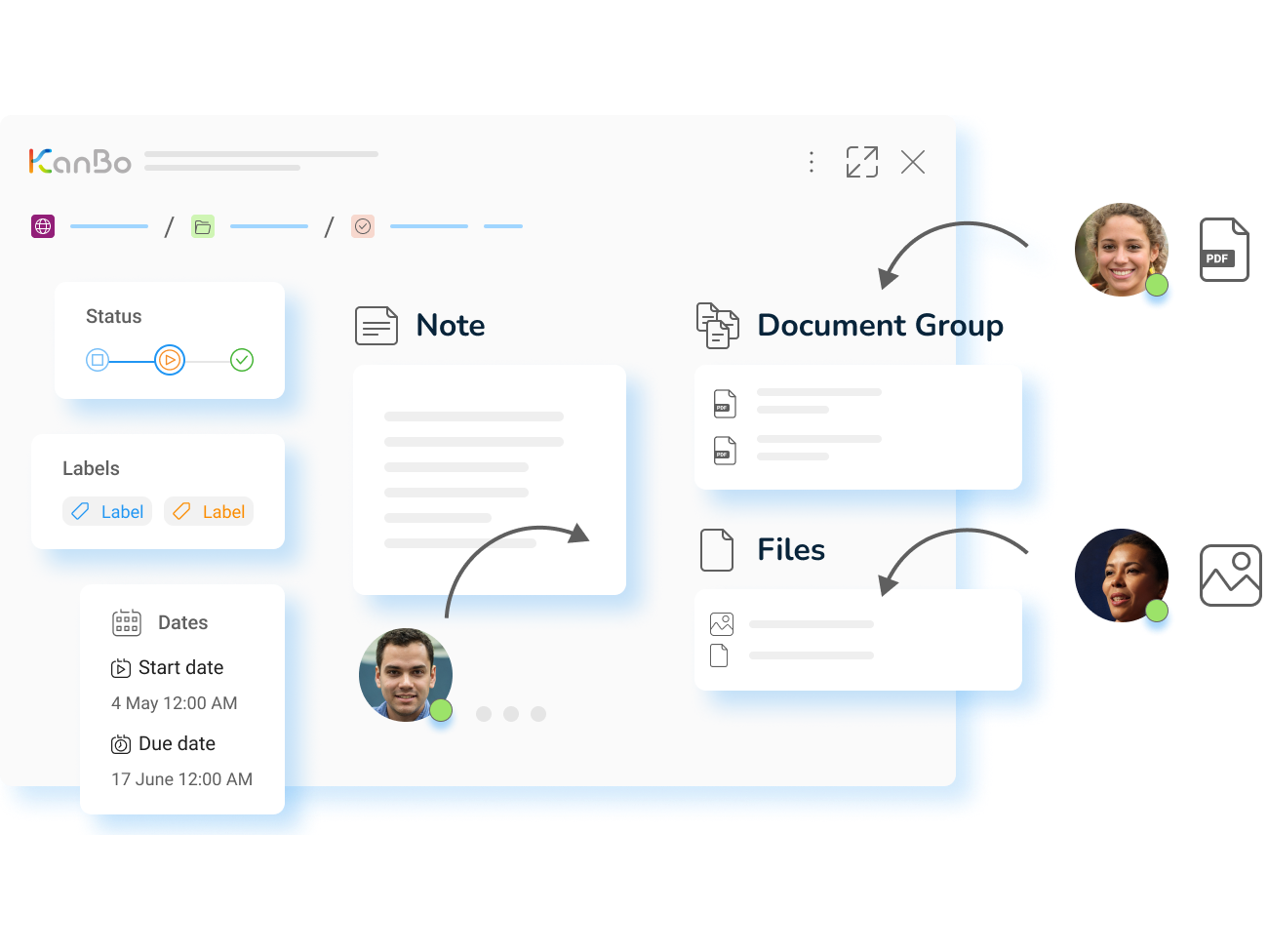
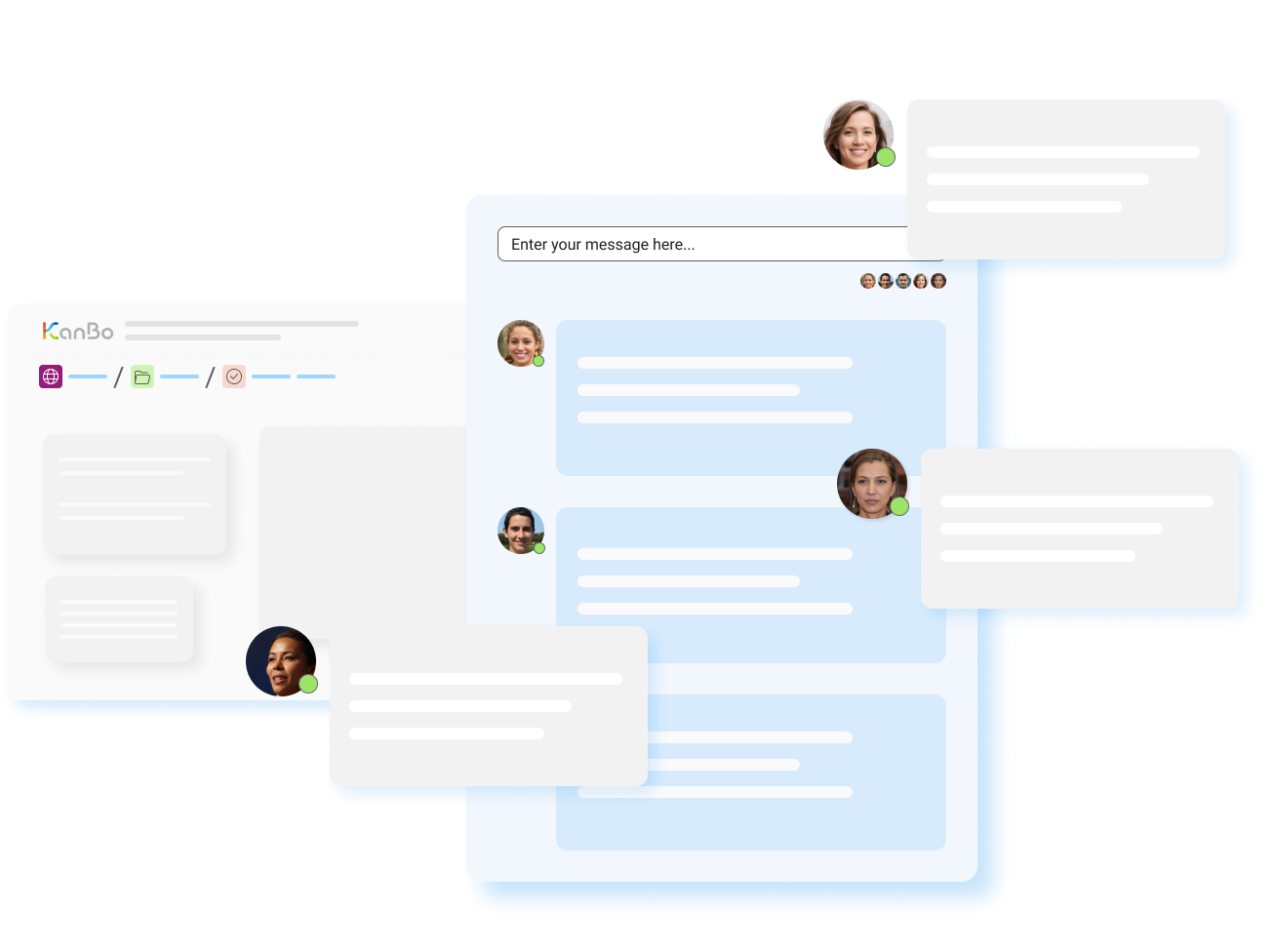
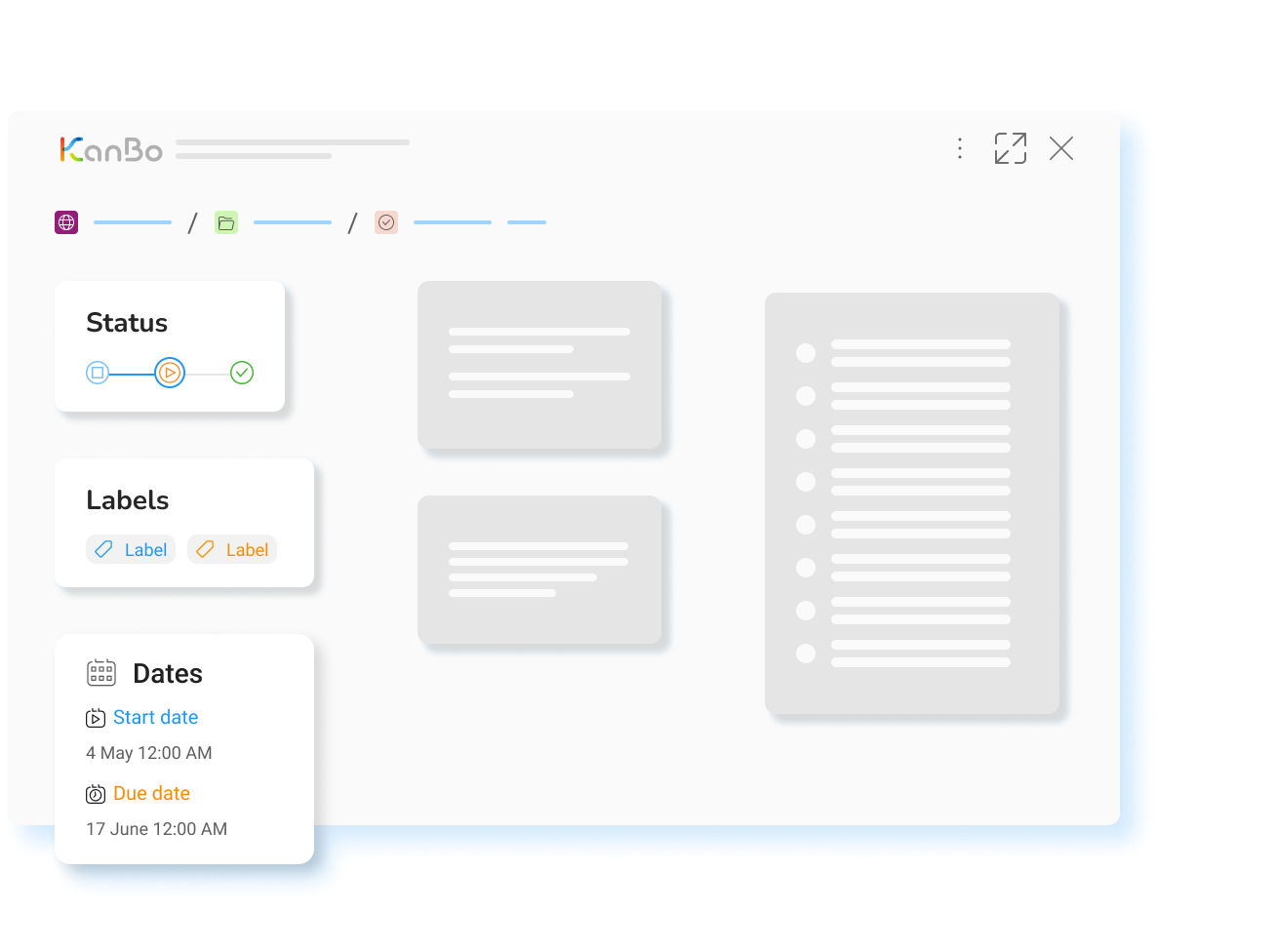
Context makes work understandable
KanBo Cards bring together the information people and AI need to understand work: purpose, ownership, status, documents, decisions, deadlines, dependencies, and history. Instead of managing tasks as isolated items, KanBo keeps every work item connected to the context needed for clear action, reliable collaboration, and better decisions.

Understand where work stands
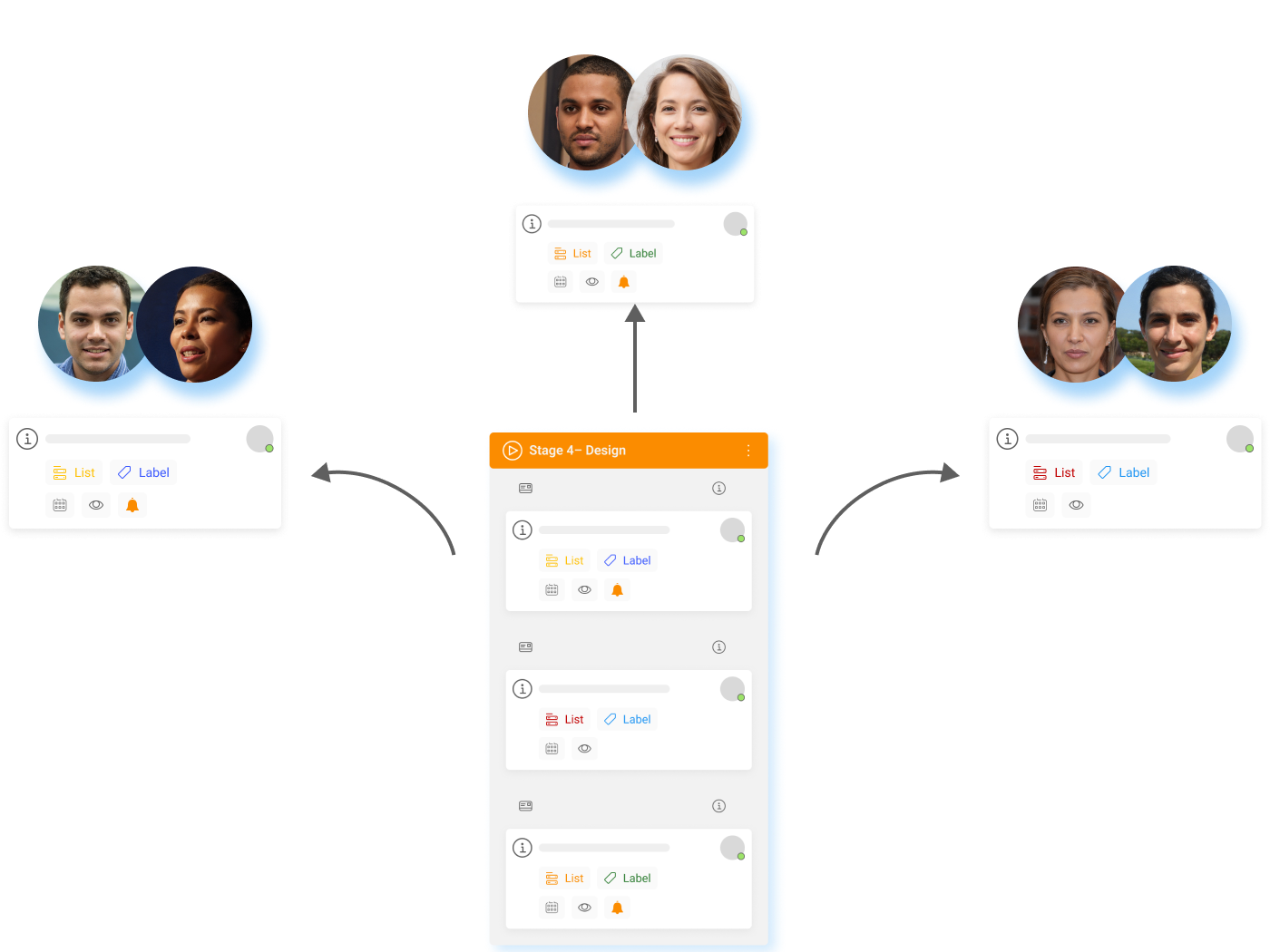
KanBo statuses show the current state of every work item: planned, active, waiting, blocked, completed, or rejected. This gives people and AI assistants a reliable process signal before they act.
Instead of asking “What is the situation?”, teams can immediately see where the work stands, what needs attention, and which next step is possible.

See time, deadlines, and dependencies
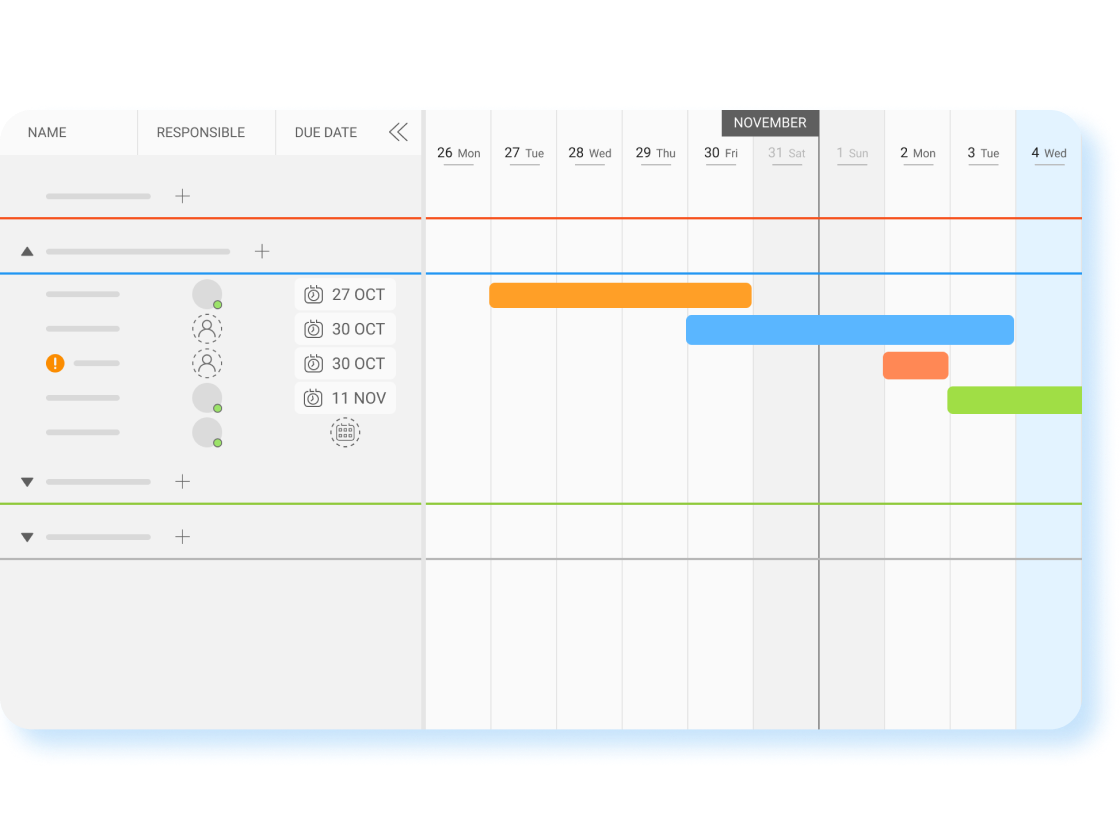
KanBo connects work with dates, schedules, timelines, and dependencies. Teams can understand not only what must be done, but when it must happen and how delays affect related work.
For managers, this creates planning clarity. For AI agents, it provides the time context needed to summarize risks, detect delays, and suggest next actions.

Involve the right people with the right role
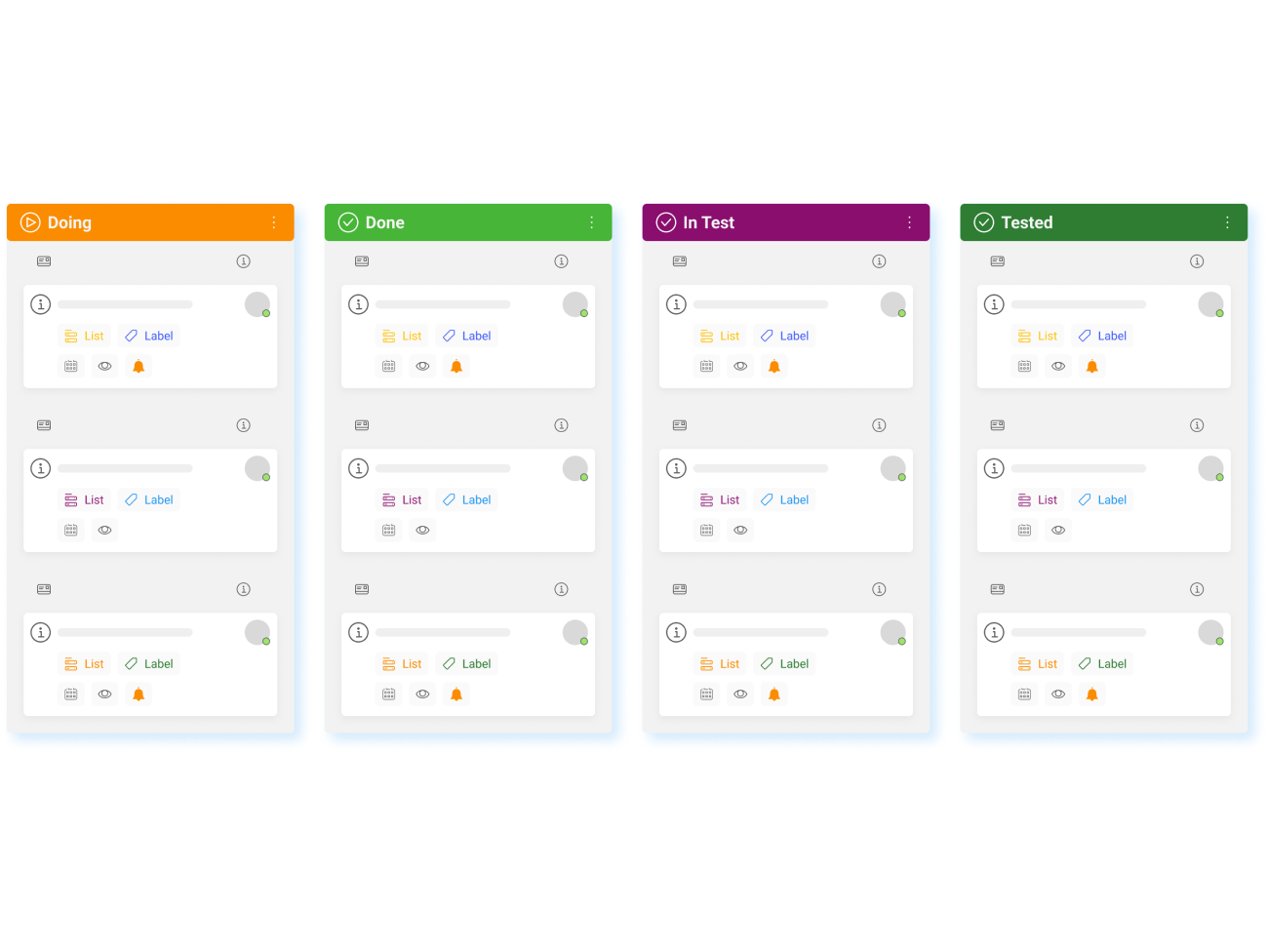
KanBo connects work with Responsible Persons, Co-Workers, roles, mentions, and permissions. Everyone can see who owns the work, who contributes, who should review, and who needs to stay informed.
This is critical for human-AI collaboration: AI can support the work, but the system still shows who is accountable, who decides, and where human confirmation is required.

Keep decisions connected to the work
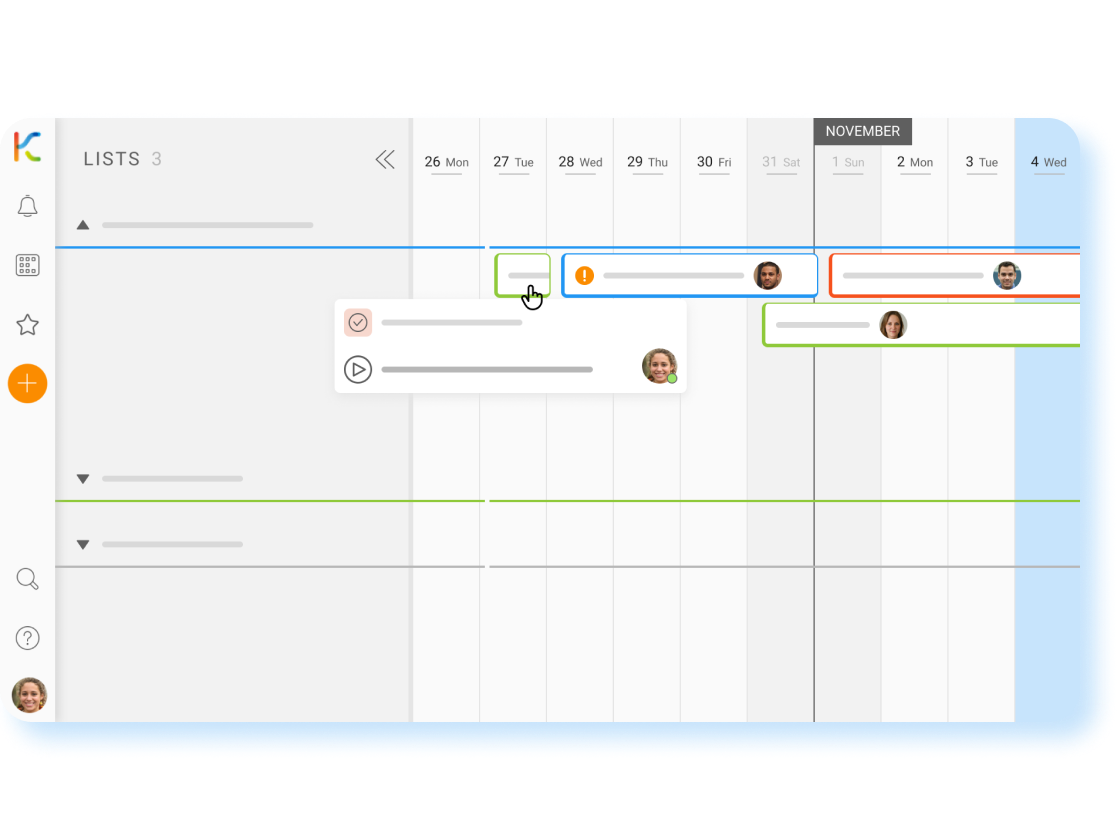
KanBo keeps comments, notes, documents, status changes, and activity history attached to the Card. This creates a traceable record of what happened, why it happened, and which information supported the decision.
People gain continuity. AI gains structured context. The organization keeps knowledge where it belongs: directly inside the work.
Get started today with
KanBo!

KanBo is a work coordination software designed to help self-organizing teams work smarter and faster. You can see KanBo in action by accessing our Sandbox demonstration environment.
Q&A

What is Work Context in KanBo?
Work Context is the complete information around a task: purpose, owner, documents, comments, decisions, deadlines, status, dependencies, and history. In KanBo, this context is kept directly inside the Card, so people and AI assistants can understand the work before acting on it.

Why is Work Context important for human and AI collaboration?
People need context to make good decisions. AI needs context to produce useful and reliable support. KanBo gives both humans and AI the same structured work reality: who is responsible, what has happened, which documents matter, what is blocked, and what should happen next.

How does KanBo help teams keep work context clear?
KanBo connects every work item with statuses, roles, documents, notes, comments, blockers, relations, dates, and activity history. This reduces scattered information and makes it easier for teams to track progress, understand decisions, and continue work without repeated explanations.
Work Context
Work context is the information needed to understand, decide, and act correctly. It connects every task with its purpose, owner, documents, discussions, decisions, deadlines, dependencies, and history.
KanBo is a platform for work context. It keeps everything related to a work item in one structured place, so people, AI assistants, LLMs, and agents can work with the same operational reality — not scattered fragments from emails, chats, meetings, folders, and spreadsheets.
With KanBo, every Card becomes a complete context container: what needs to be done, who is responsible, what information is available, what has already happened, what decisions were made, and what should happen next.
Context is the foundation of coordinated human and AI work
Work cannot be coordinated well when information is separated from the task. A document in one folder, a decision in a meeting, a question in chat, and a deadline in another system create fragmented context.
For people, this creates confusion and repeated explanations. For AI, it creates an even bigger problem: without reliable context, an LLM or agent cannot understand the purpose, constraints, history, dependencies, or responsibility behind the work.
KanBo keeps work and context together. This allows humans and AI to collaborate around structured, traceable, and decision-ready work information.
Manager’s question
Why was this decision made, and can people or AI understand the reasoning behind it?
KanBo keeps decisions close to the work they affect. Comments, notes, documents, mentions, status changes, and activity history show how a Card developed over time and why certain actions were taken.
For people, this reduces repeated explanations and dependency on memory. For AI, it provides the reasoning trail needed to summarize, classify, recommend next steps, or prepare decision support without guessing from incomplete information.
This connects strongly with F. A. Hayek’s Nobel-recognized insight that knowledge in society is dispersed and cannot be fully held by one central mind. In organizations, relevant work knowledge is also dispersed across people, documents, systems, and situations. KanBo helps collect that dispersed knowledge around the work item where it is needed.
Benefit: Decisions become understandable, traceable, and reusable by both people and AI.
Manager’s question
Are the right documents connected to the right work, so people and AI use the correct information?
KanBo connects documents directly with Cards, Spaces, and processes. Specifications, contracts, reports, drawings, presentations, approvals, and working files stay attached to the work they support.
For people, this reduces search time and version confusion. For AI, document context is essential: the model needs to know which files belong to which task, decision, approval, customer case, project phase, or process step.
Without document context, AI may summarize the wrong file, miss the relevant version, or produce an answer disconnected from the actual work.
Benefit: Documents become usable work context instead of isolated files.
Manager’s question
Who is involved, who is responsible, and how should humans and AI cooperate around this work?
KanBo connects work with Responsible Persons, Co-Workers, roles, mentions, comments, notifications, permissions, and activity streams. This shows who owns the work, who contributes, who reviews, and who needs to stay informed.
For people, this creates clear collaboration. For AI agents, it creates boundaries: who should be notified, who can decide, who must approve, and where human confirmation is required.
This connects with transaction-cost economics. Ronald Coase showed that institutional structures matter because coordination is not free; real organizations need mechanisms that reduce search, negotiation, monitoring, and handoff costs. KanBo reduces these costs by making collaboration roles explicit inside the work context.
Benefit: Human-AI collaboration becomes structured, role-aware, and easier to govern.
Manager’s question
Where is this work in the process, what depends on it, and what can AI safely do next?
KanBo connects every Card with statuses, dates, blockers, checklists, relations, dependencies, labels, custom fields, and history. This shows not only what the task is, but also where it stands in the larger process.
For people, process context makes next steps clear. For AI, process context defines what kind of assistance is appropriate: summarize, draft, classify, remind, detect missing information, suggest next steps, or escalate a blocker.
Oliver Williamson’s Nobel-recognized work on economic governance is useful here: organizations need governance mechanisms for transactions and cooperation where contracts and rules cannot specify every detail. In KanBo, process context provides that governance layer for daily work, including AI-supported execution.
Benefit: Work moves forward with clearer next steps, safer AI assistance, and better control over dependencies.
Context makes work understandable
KanBo Cards bring together the information people and AI need to understand work: purpose, ownership, status, documents, decisions, deadlines, dependencies, and history. Instead of managing tasks as isolated items, KanBo keeps every work item connected to the context needed for clear action, reliable collaboration, and better decisions.
Understand where work stands
KanBo statuses show the current state of every work item: planned, active, waiting, blocked, completed, or rejected. This gives people and AI assistants a reliable process signal before they act.
Instead of asking “What is the situation?”, teams can immediately see where the work stands, what needs attention, and which next step is possible.
See time, deadlines, and dependencies
KanBo connects work with dates, schedules, timelines, and dependencies. Teams can understand not only what must be done, but when it must happen and how delays affect related work.
For managers, this creates planning clarity. For AI agents, it provides the time context needed to summarize risks, detect delays, and suggest next actions.
Involve the right people with the right role
KanBo connects work with Responsible Persons, Co-Workers, roles, mentions, and permissions. Everyone can see who owns the work, who contributes, who should review, and who needs to stay informed.
This is critical for human-AI collaboration: AI can support the work, but the system still shows who is accountable, who decides, and where human confirmation is required.
Keep decisions connected to the work
KanBo keeps comments, notes, documents, status changes, and activity history attached to the Card. This creates a traceable record of what happened, why it happened, and which information supported the decision.
People gain continuity. AI gains structured context. The organization keeps knowledge where it belongs: directly inside the work.
Get started today with KanBo!
KanBo is a work coordination software designed to help self-organizing teams work smarter and faster. You can see KanBo in action by accessing our Sandbox demonstration environment.
Q&A
What is Work Context in KanBo?
Work Context is the complete information around a task: purpose, owner, documents, comments, decisions, deadlines, status, dependencies, and history. In KanBo, this context is kept directly inside the Card, so people and AI assistants can understand the work before acting on it.
Why is Work Context important for human and AI collaboration?
People need context to make good decisions. AI needs context to produce useful and reliable support. KanBo gives both humans and AI the same structured work reality: who is responsible, what has happened, which documents matter, what is blocked, and what should happen next.
How does KanBo help teams keep work context clear?
KanBo connects every work item with statuses, roles, documents, notes, comments, blockers, relations, dates, and activity history. This reduces scattered information and makes it easier for teams to track progress, understand decisions, and continue work without repeated explanations.
Work Context
Work context is the information needed to understand, decide, and act correctly. It connects every task with its purpose, owner, documents, discussions, decisions, deadlines, dependencies, and history.
KanBo is a platform for work context. It keeps everything related to a work item in one structured place, so people, AI assistants, LLMs, and agents can work with the same operational reality — not scattered fragments from emails, chats, meetings, folders, and spreadsheets.
With KanBo, every Card becomes a complete context container: what needs to be done, who is responsible, what information is available, what has already happened, what decisions were made, and what should happen next.
Context is the foundation of coordinated human and AI work
Work cannot be coordinated well when information is separated from the task. A document in one folder, a decision in a meeting, a question in chat, and a deadline in another system create fragmented context.
For people, this creates confusion and repeated explanations. For AI, it creates an even bigger problem: without reliable context, an LLM or agent cannot understand the purpose, constraints, history, dependencies, or responsibility behind the work.
KanBo keeps work and context together. This allows humans and AI to collaborate around structured, traceable, and decision-ready work information.
Manager’s question
Why was this decision made, and can people or AI understand the reasoning behind it?
KanBo keeps decisions close to the work they affect. Comments, notes, documents, mentions, status changes, and activity history show how a Card developed over time and why certain actions were taken.
For people, this reduces repeated explanations and dependency on memory. For AI, it provides the reasoning trail needed to summarize, classify, recommend next steps, or prepare decision support without guessing from incomplete information.
This connects strongly with F. A. Hayek’s Nobel-recognized insight that knowledge in society is dispersed and cannot be fully held by one central mind. In organizations, relevant work knowledge is also dispersed across people, documents, systems, and situations. KanBo helps collect that dispersed knowledge around the work item where it is needed.
Benefit: Decisions become understandable, traceable, and reusable by both people and AI.
Manager’s question
Are the right documents connected to the right work, so people and AI use the correct information?
KanBo connects documents directly with Cards, Spaces, and processes. Specifications, contracts, reports, drawings, presentations, approvals, and working files stay attached to the work they support.
For people, this reduces search time and version confusion. For AI, document context is essential: the model needs to know which files belong to which task, decision, approval, customer case, project phase, or process step.
Without document context, AI may summarize the wrong file, miss the relevant version, or produce an answer disconnected from the actual work.
Benefit: Documents become usable work context instead of isolated files.
Manager’s question
Who is involved, who is responsible, and how should humans and AI cooperate around this work?
KanBo connects work with Responsible Persons, Co-Workers, roles, mentions, comments, notifications, permissions, and activity streams. This shows who owns the work, who contributes, who reviews, and who needs to stay informed.
For people, this creates clear collaboration. For AI agents, it creates boundaries: who should be notified, who can decide, who must approve, and where human confirmation is required.
This connects with transaction-cost economics. Ronald Coase showed that institutional structures matter because coordination is not free; real organizations need mechanisms that reduce search, negotiation, monitoring, and handoff costs. KanBo reduces these costs by making collaboration roles explicit inside the work context.
Benefit: Human-AI collaboration becomes structured, role-aware, and easier to govern.
Manager’s question
Where is this work in the process, what depends on it, and what can AI safely do next?
KanBo connects every Card with statuses, dates, blockers, checklists, relations, dependencies, labels, custom fields, and history. This shows not only what the task is, but also where it stands in the larger process.
For people, process context makes next steps clear. For AI, process context defines what kind of assistance is appropriate: summarize, draft, classify, remind, detect missing information, suggest next steps, or escalate a blocker.
Oliver Williamson’s Nobel-recognized work on economic governance is useful here: organizations need governance mechanisms for transactions and cooperation where contracts and rules cannot specify every detail. In KanBo, process context provides that governance layer for daily work, including AI-supported execution.
Benefit: Work moves forward with clearer next steps, safer AI assistance, and better control over dependencies.
Context makes work understandable
KanBo Cards bring together the information people and AI need to understand work: purpose, ownership, status, documents, decisions, deadlines, dependencies, and history. Instead of managing tasks as isolated items, KanBo keeps every work item connected to the context needed for clear action, reliable collaboration, and better decisions.
Understand where work stands
KanBo statuses show the current state of every work item: planned, active, waiting, blocked, completed, or rejected. This gives people and AI assistants a reliable process signal before they act.
Instead of asking “What is the situation?”, teams can immediately see where the work stands, what needs attention, and which next step is possible.
See time, deadlines, and dependencies
KanBo connects work with dates, schedules, timelines, and dependencies. Teams can understand not only what must be done, but when it must happen and how delays affect related work.
For managers, this creates planning clarity. For AI agents, it provides the time context needed to summarize risks, detect delays, and suggest next actions.
Involve the right people with the right role
KanBo connects work with Responsible Persons, Co-Workers, roles, mentions, and permissions. Everyone can see who owns the work, who contributes, who should review, and who needs to stay informed.
This is critical for human-AI collaboration: AI can support the work, but the system still shows who is accountable, who decides, and where human confirmation is required.
Keep decisions connected to the work
KanBo keeps comments, notes, documents, status changes, and activity history attached to the Card. This creates a traceable record of what happened, why it happened, and which information supported the decision.
People gain continuity. AI gains structured context. The organization keeps knowledge where it belongs: directly inside the work.
Get started today with KanBo!
KanBo is a work coordination software designed to help self-organizing teams work smarter and faster. You can see KanBo in action by accessing our Sandbox demonstration environment.
Q&A
What is Work Context in KanBo?
Work Context is the complete information around a task: purpose, owner, documents, comments, decisions, deadlines, status, dependencies, and history. In KanBo, this context is kept directly inside the Card, so people and AI assistants can understand the work before acting on it.
Why is Work Context important for human and AI collaboration?
People need context to make good decisions. AI needs context to produce useful and reliable support. KanBo gives both humans and AI the same structured work reality: who is responsible, what has happened, which documents matter, what is blocked, and what should happen next.
How does KanBo help teams keep work context clear?
KanBo connects every work item with statuses, roles, documents, notes, comments, blockers, relations, dates, and activity history. This reduces scattered information and makes it easier for teams to track progress, understand decisions, and continue work without repeated explanations.
Work Context
Work context is the information needed to understand, decide, and act correctly. It connects every task with its purpose, owner, documents, discussions, decisions, deadlines, dependencies, and history.
KanBo is a platform for work context. It keeps everything related to a work item in one structured place, so people, AI assistants, LLMs, and agents can work with the same operational reality — not scattered fragments from emails, chats, meetings, folders, and spreadsheets.
With KanBo, every Card becomes a complete context container: what needs to be done, who is responsible, what information is available, what has already happened, what decisions were made, and what should happen next.
Context is the foundation of coordinated human and AI work
Work cannot be coordinated well when information is separated from the task. A document in one folder, a decision in a meeting, a question in chat, and a deadline in another system create fragmented context.
For people, this creates confusion and repeated explanations. For AI, it creates an even bigger problem: without reliable context, an LLM or agent cannot understand the purpose, constraints, history, dependencies, or responsibility behind the work.
KanBo keeps work and context together. This allows humans and AI to collaborate around structured, traceable, and decision-ready work information.
Manager’s question
Why was this decision made, and can people or AI understand the reasoning behind it?
KanBo keeps decisions close to the work they affect. Comments, notes, documents, mentions, status changes, and activity history show how a Card developed over time and why certain actions were taken.
For people, this reduces repeated explanations and dependency on memory. For AI, it provides the reasoning trail needed to summarize, classify, recommend next steps, or prepare decision support without guessing from incomplete information.
This connects strongly with F. A. Hayek’s Nobel-recognized insight that knowledge in society is dispersed and cannot be fully held by one central mind. In organizations, relevant work knowledge is also dispersed across people, documents, systems, and situations. KanBo helps collect that dispersed knowledge around the work item where it is needed.
Benefit: Decisions become understandable, traceable, and reusable by both people and AI.
Manager’s question
Are the right documents connected to the right work, so people and AI use the correct information?
KanBo connects documents directly with Cards, Spaces, and processes. Specifications, contracts, reports, drawings, presentations, approvals, and working files stay attached to the work they support.
For people, this reduces search time and version confusion. For AI, document context is essential: the model needs to know which files belong to which task, decision, approval, customer case, project phase, or process step.
Without document context, AI may summarize the wrong file, miss the relevant version, or produce an answer disconnected from the actual work.
Benefit: Documents become usable work context instead of isolated files.
Manager’s question
Who is involved, who is responsible, and how should humans and AI cooperate around this work?
KanBo connects work with Responsible Persons, Co-Workers, roles, mentions, comments, notifications, permissions, and activity streams. This shows who owns the work, who contributes, who reviews, and who needs to stay informed.
For people, this creates clear collaboration. For AI agents, it creates boundaries: who should be notified, who can decide, who must approve, and where human confirmation is required.
This connects with transaction-cost economics. Ronald Coase showed that institutional structures matter because coordination is not free; real organizations need mechanisms that reduce search, negotiation, monitoring, and handoff costs. KanBo reduces these costs by making collaboration roles explicit inside the work context.
Benefit: Human-AI collaboration becomes structured, role-aware, and easier to govern.
Manager’s question
Where is this work in the process, what depends on it, and what can AI safely do next?
KanBo connects every Card with statuses, dates, blockers, checklists, relations, dependencies, labels, custom fields, and history. This shows not only what the task is, but also where it stands in the larger process.
For people, process context makes next steps clear. For AI, process context defines what kind of assistance is appropriate: summarize, draft, classify, remind, detect missing information, suggest next steps, or escalate a blocker.
Oliver Williamson’s Nobel-recognized work on economic governance is useful here: organizations need governance mechanisms for transactions and cooperation where contracts and rules cannot specify every detail. In KanBo, process context provides that governance layer for daily work, including AI-supported execution.
Benefit: Work moves forward with clearer next steps, safer AI assistance, and better control over dependencies.
Context makes work understandable
KanBo Cards bring together the information people and AI need to understand work: purpose, ownership, status, documents, decisions, deadlines, dependencies, and history. Instead of managing tasks as isolated items, KanBo keeps every work item connected to the context needed for clear action, reliable collaboration, and better decisions.
Understand where work stands
KanBo statuses show the current state of every work item: planned, active, waiting, blocked, completed, or rejected. This gives people and AI assistants a reliable process signal before they act.
Instead of asking “What is the situation?”, teams can immediately see where the work stands, what needs attention, and which next step is possible.
See time, deadlines, and dependencies
KanBo connects work with dates, schedules, timelines, and dependencies. Teams can understand not only what must be done, but when it must happen and how delays affect related work.
For managers, this creates planning clarity. For AI agents, it provides the time context needed to summarize risks, detect delays, and suggest next actions.
Involve the right people with the right role
KanBo connects work with Responsible Persons, Co-Workers, roles, mentions, and permissions. Everyone can see who owns the work, who contributes, who should review, and who needs to stay informed.
This is critical for human-AI collaboration: AI can support the work, but the system still shows who is accountable, who decides, and where human confirmation is required.
Keep decisions connected to the work
KanBo keeps comments, notes, documents, status changes, and activity history attached to the Card. This creates a traceable record of what happened, why it happened, and which information supported the decision.
People gain continuity. AI gains structured context. The organization keeps knowledge where it belongs: directly inside the work.
Get started today with KanBo!
KanBo is a work coordination software designed to help self-organizing teams work smarter and faster. You can see KanBo in action by accessing our Sandbox demonstration environment.
Q&A
What is Work Context in KanBo?
Work Context is the complete information around a task: purpose, owner, documents, comments, decisions, deadlines, status, dependencies, and history. In KanBo, this context is kept directly inside the Card, so people and AI assistants can understand the work before acting on it.
Why is Work Context important for human and AI collaboration?
People need context to make good decisions. AI needs context to produce useful and reliable support. KanBo gives both humans and AI the same structured work reality: who is responsible, what has happened, which documents matter, what is blocked, and what should happen next.
How does KanBo help teams keep work context clear?
KanBo connects every work item with statuses, roles, documents, notes, comments, blockers, relations, dates, and activity history. This reduces scattered information and makes it easier for teams to track progress, understand decisions, and continue work without repeated explanations.