

Specialist Coordinator
A Specialist Coordinator holds a process together across departments they do not manage. The title varies — programme coordinator, planning coordinator, technical coordinator, operations coordinator — but the work is the same: keep specialists moving in the same direction, chase the inputs, know what is waiting on what, and be the person who can answer where things actually stand. That work has a structural problem. When the picture lives in one person’s inbox, spreadsheet and memory, that person becomes both the organization’s coordination layer and its single point of failure — and spends the day re-explaining rather than coordinating. KanBo is adopted at organization level, with deployment and access governed centrally. But the coordinator is usually the first person to feel the difference, because coordination is the whole of the job rather than a part of it.

What the job actually consists of
Most tools for this role assume the problem is tracking tasks. It is not. The tasks are usually clear. What is unclear is the state of everything around them: which input is late, which decision is still open, who owns the next step, and what breaks if a date moves. KanBo puts that state on the work itself, where anyone can read it without asking. The coordinator stops being the interface to the information and starts being the person who acts on it.

Kanban View
Hold the whole picture without holding it in your head
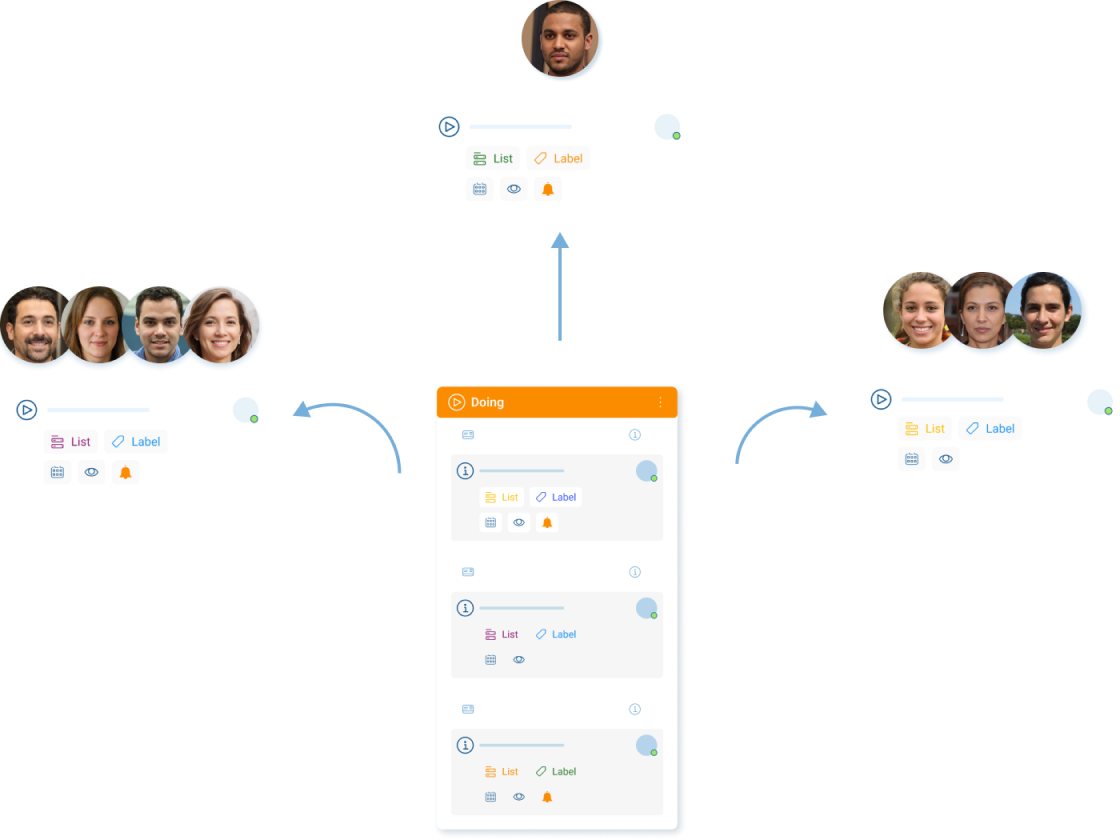
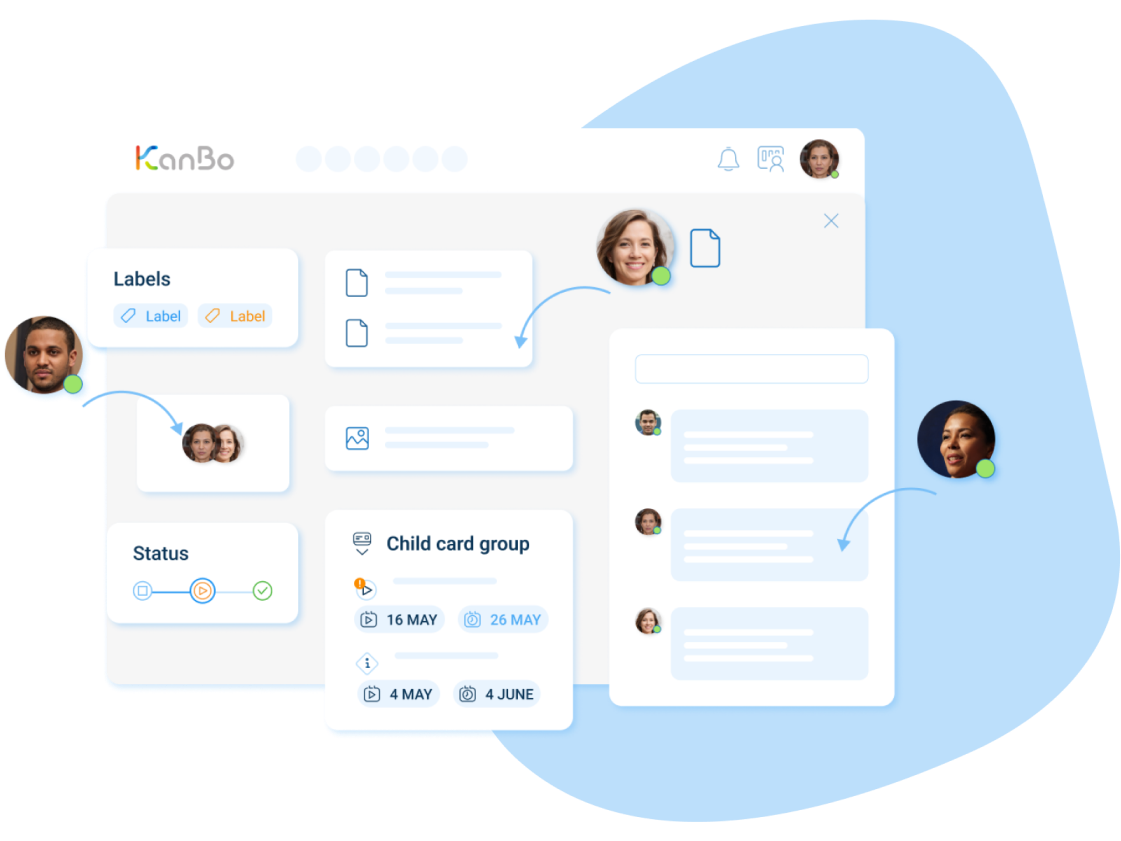
Cards carry a Responsible Person, contributors, dates, documents, comments and status, so each item is complete on its own. Statuses are defined per space in your own vocabulary and assigned a type — Information, Not started, In progress, Completed or Cancelled — which is why local naming never breaks the progress rollup above it. The point for a coordinator is not the board. It is that nobody has to ask you for a status, because the status is where the work is.

Comments and mentions
Ask once, in the place the answer belongs
Comments and mentions sit on the card rather than in a thread nobody can find later. The activity history shows what changed, when and by whom, so a question answered in March is still answered in September. A card can also send email out and receive it back, and a space or card can be given its own address — so a request forwarded from Outlook arrives as a structured card with an owner and a due date, and specialists who live in email are not asked to change tools to be coordinated.


Gantt view
See what is genuinely waiting on what
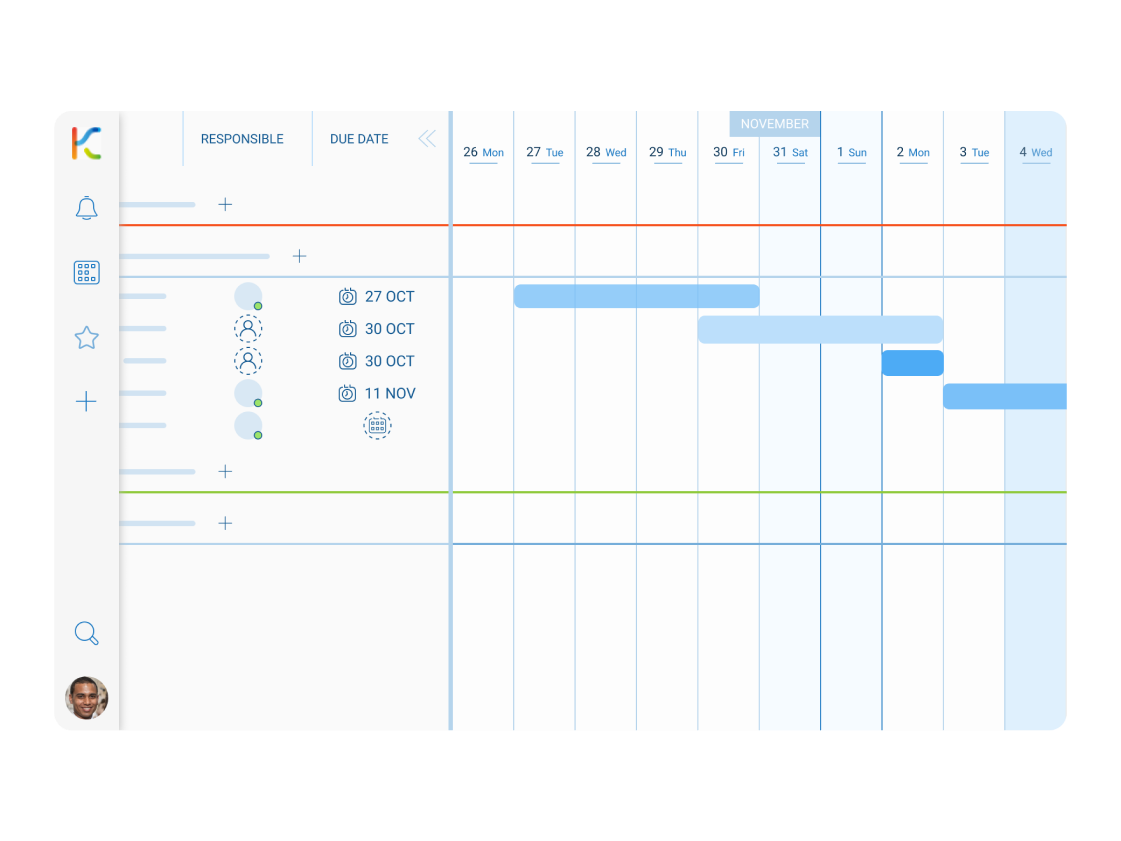
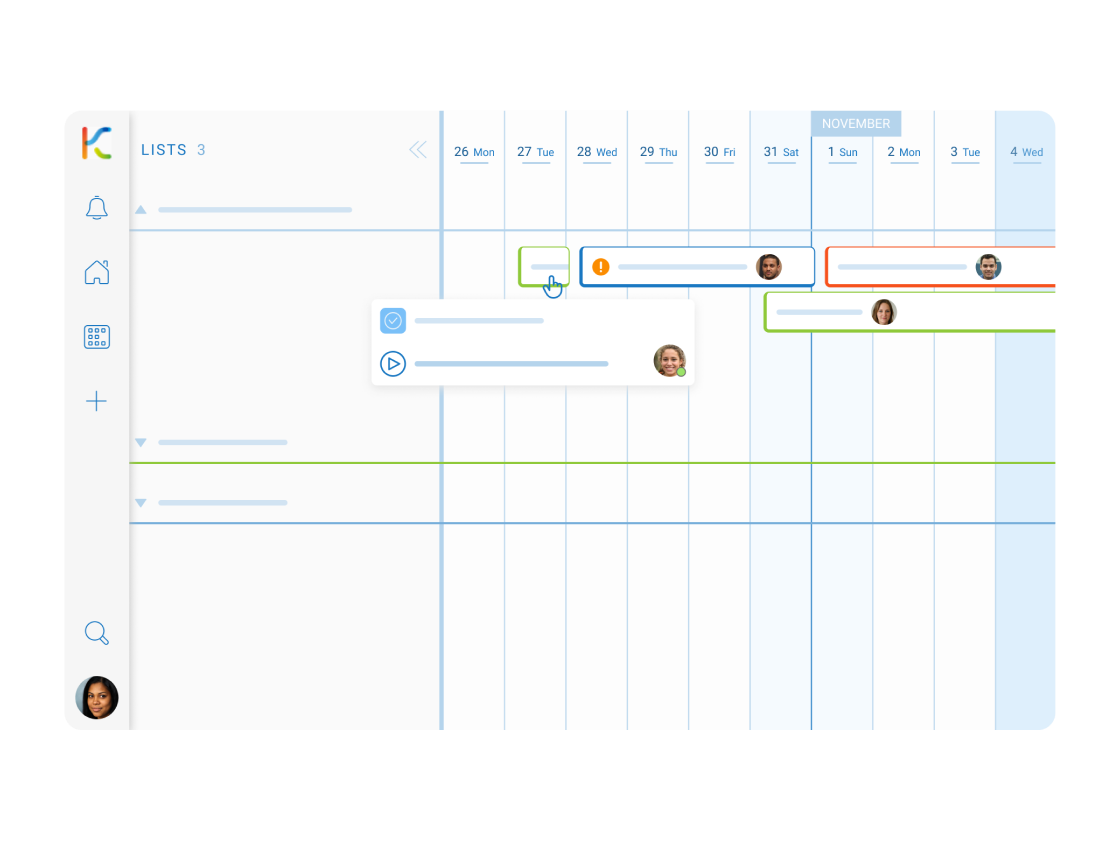
Cards link as parent and child or as predecessor and successor, and those links work across spaces — so a card owned by another department can be the thing your milestone waits on, recorded as a real dependency rather than a note in your plan. KanBo checks those links against the dates and flags conflicts: a predecessor still incomplete, a child due after its parent, a date range that cannot happen. Blockers are managed objects with a name, a reason and a responsible owner, and can be defined once and reused, so “waiting on legal review” becomes something the organization can count instead of something you keep mentioning.

Calendar view
Coordinate time across people who share none
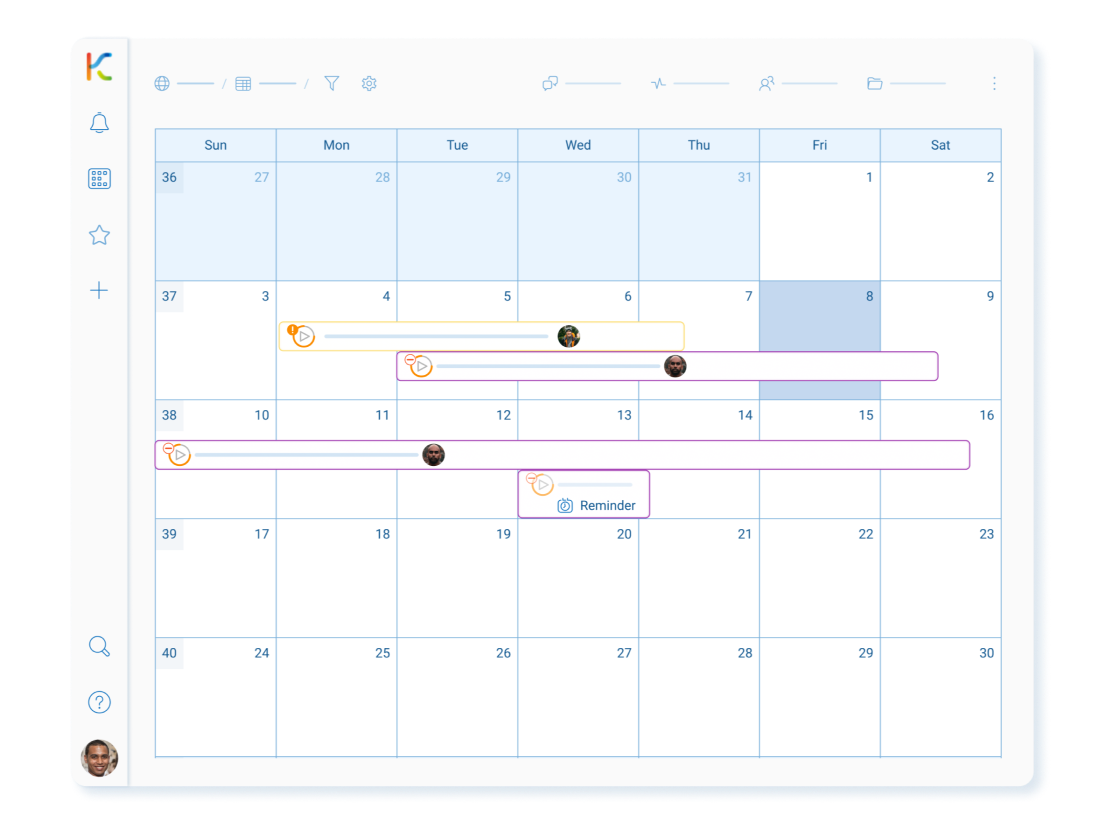
Calendar and Timeline views read the same cards, at month, week or day scale, and can be grouped by person, status, label or space depending on what you are checking. Each person chooses whether KanBo dates appear in their Outlook as tasks, as appointments, or not at all. Time zones and working patterns stop being your problem to reconcile, because the schedule is a shared object rather than a set of messages about a schedule.
A day in the life of a Specialist Coordinator
Not a demo script. This is what changes when the coordination layer is a system instead of a person.
Step 1 — You start with the exceptions, not the list
You open MySpace, where the cards you care about from every space sit together, and go straight to what changed overnight and what is flagged: overdue items, blocked cards, dependency conflicts. Filters answer the question you actually have — what is blocked, what is due this week, what has been sitting untouched too long — rather than showing you everything and leaving you to sort it.
Step 2 — You spend the day on decisions, not on retrieval
Nobody asks you for the current version, because documents are attached to the work through managed sources rather than sent around. Nobody asks you for status, because it is on the card. When a date moves, you see what it breaks before you agree to it. Work that arrives by email lands as a card with an owner instead of as a message you have to translate. The meetings that used to exist to synchronize understanding stop being necessary. The ones that remain are about decisions.

Step 3 — You leave the record behind you
What happened, why, who decided and what was open stays with the work, not with you. That is what makes a handover, an audit, an absence or a reorganization survivable — and it is the difference between a coordinator whose value is being irreplaceable and one whose value is that the process runs.
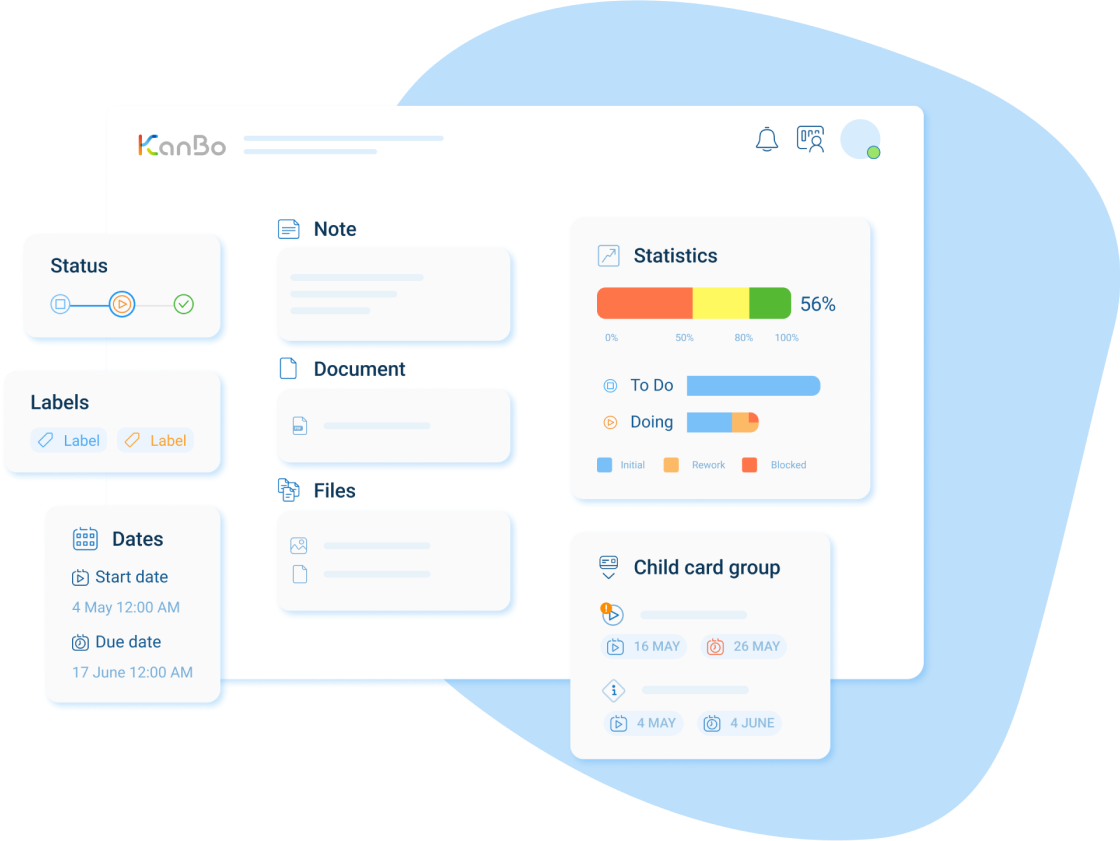
Coordinating across departments you do not manage
A coordinator’s authority is rarely formal. You cannot instruct another department’s specialist; you can only make the situation clear enough that the next step is obvious. Mary Parker Follett called this the law of the situation: the most durable form of authority is not one person telling another what to do, but both taking their instruction from the facts in front of them. That is what a coordinator does all day, and it is why visible, shared structure matters more in this role than in almost any other.

Spaces
One structure, several departments
One structure, several departments Each space holds a process, a project or a phase, and a cross-functional group can work in one shared space regardless of which department they report to. Mirror cards put the same card in front of every team that needs it — the same card, not a copy — so an update in one place is an update everywhere. Access runs across six permission levels and can be granted to groups, so people join and leave as the work changes, and colleagues who only need to follow along get read access rather than a forwarded email.
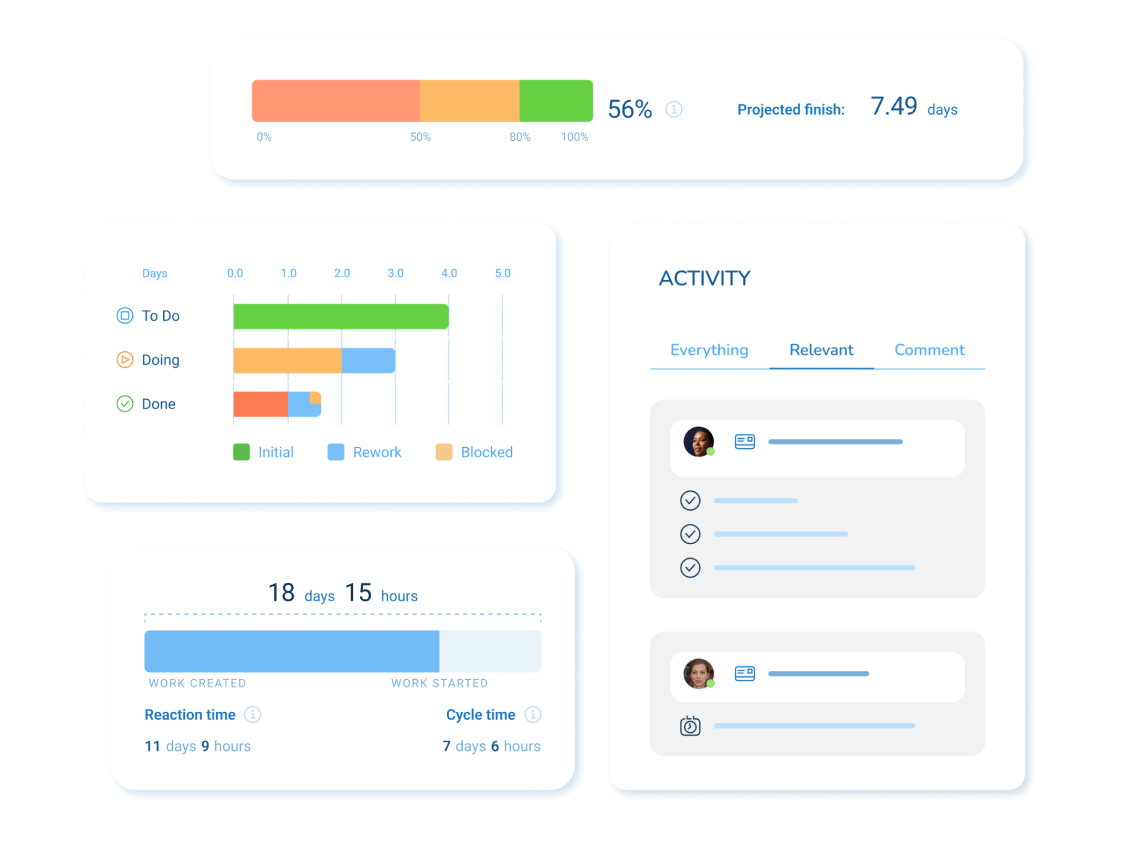

Document sources and folders
The current version, attached to the work
Documents reach cards through managed sources connected to the organization’s existing repositories, so the file on the card is the file in the library — not a copy that started diverging the moment it was attached. Cards hold document lists and folders, and a card template can create the required folder structure automatically when work starts. When a library is moved or renamed, the connection can be repaired rather than silently breaking. Version confusion is the most expensive small problem in this job, and this is where it is solved.
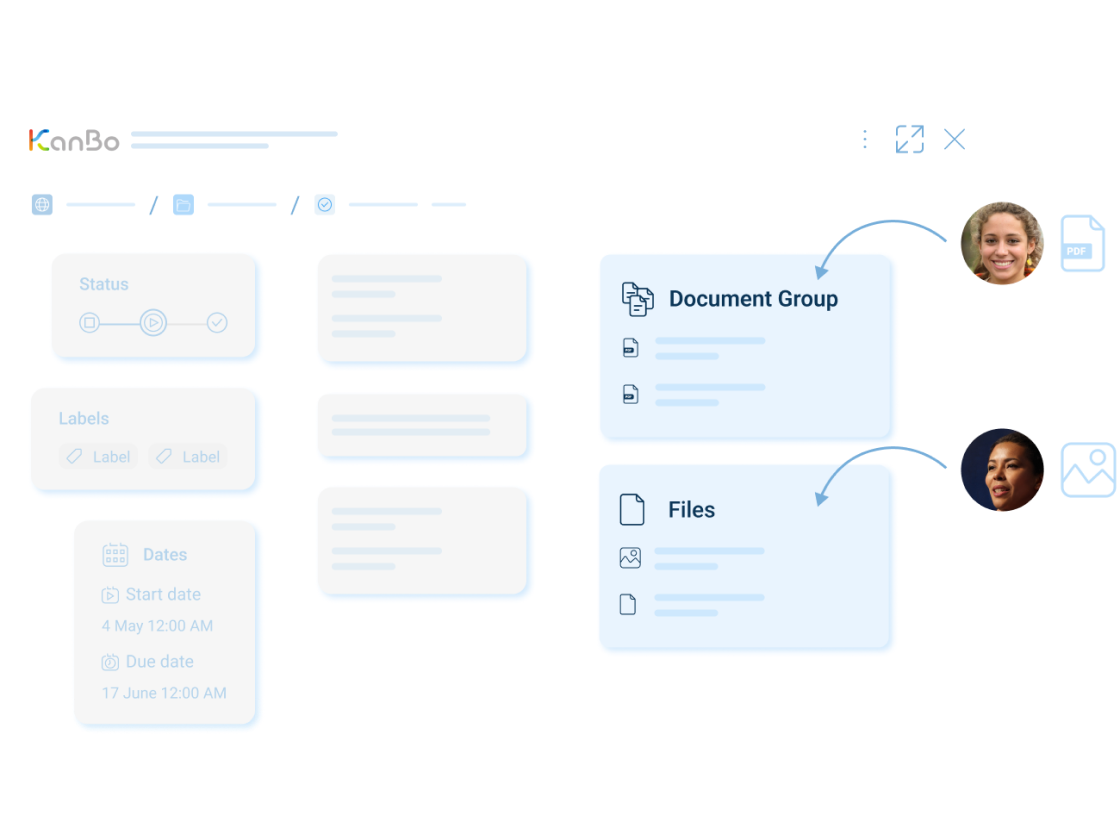

Search and space analytics
Find it without asking anyone
Search reaches inside the work — card names, notes, comments, checklist items, document names, list and space names, custom dates, people. The thing you half-remember from a conversation six weeks ago is findable without knowing which space it was in. Space analytics and progress are generated from live cards, so a status report is a view rather than a document you assemble. Stakeholders can be given reader access and look for themselves.
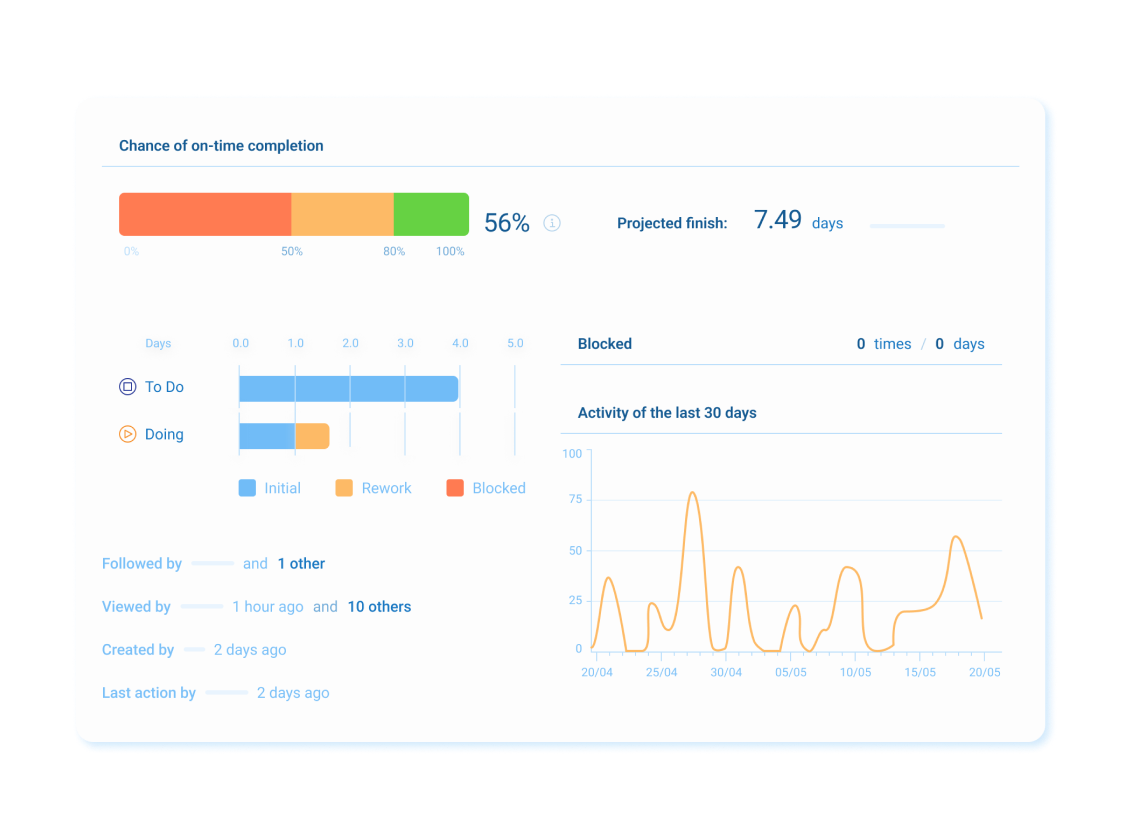

Timeline and card relations
Show the shape of the work, not a summary of it
Because dependencies are real links across spaces, a timeline shows how the parts of an initiative actually constrain each other. That turns a coordination conversation into something concrete: not “we think this is tight” but “these four things sit between us and the date, and two of them belong to another department.” Ten views read the same cards. The team’s Kanban, your Gantt and the sponsor’s portfolio timeline are the same facts at different altitudes — which is what lets you escalate with evidence instead of impression.
Get started today with
KanBo!

KanBo is a work coordination software designed to help self-organizing teams work smarter and faster. You can see KanBo in action by accessing our Sandbox demonstration environment.
Q&A
Have a question? We’ve got answers!
Anyone whose job is to keep a process moving across people and departments they do not manage. The title differs by organization — programme, project, planning, technical or operations coordinator — but the pattern is constant: responsibility for the outcome, limited formal authority over the contributors, and a working day spent maintaining shared understanding.
It is the central design question, and it is why visibility beats instruction. In KanBo the next step is legible from the work itself: who owns it, what it waits on, what is blocked and by whom. A named blocker with a responsible owner moves a conversation further than a chase email, because it makes the obstacle a shared fact rather than your complaint.
It moves administration rather than adding it. Status updates stop being collected because they are already recorded; documents stop being circulated because they are attached; bulk operations change status, dates, ownership or labels across many cards at once; and recurring steps can be handled by automation rules a space owner configures and can pause without deleting. Work arriving by email becomes a card rather than something you retype.
An AI assistant is only as useful as the context it can see, and a coordinator’s context is exactly what is usually missing — purpose, ownership, history, dependencies, constraints. Because KanBo keeps that on the work item itself, an assistant can summarize a situation, flag what is at risk or draft an update from the same structured record a person reads, with responsibility and approval still visible on the card. Coordinators tend to gain most here, since holding context is the part of the job that scales worst.
Specialist Coordinator
A Specialist Coordinator holds a process together across departments they do not manage. The title varies — programme coordinator, planning coordinator, technical coordinator, operations coordinator — but the work is the same: keep specialists moving in the same direction, chase the inputs, know what is waiting on what, and be the person who can answer where things actually stand. That work has a structural problem. When the picture lives in one person’s inbox, spreadsheet and memory, that person becomes both the organization’s coordination layer and its single point of failure — and spends the day re-explaining rather than coordinating. KanBo is adopted at organization level, with deployment and access governed centrally. But the coordinator is usually the first person to feel the difference, because coordination is the whole of the job rather than a part of it.
What the job actually consists of
Most tools for this role assume the problem is tracking tasks. It is not. The tasks are usually clear. What is unclear is the state of everything around them: which input is late, which decision is still open, who owns the next step, and what breaks if a date moves. KanBo puts that state on the work itself, where anyone can read it without asking. The coordinator stops being the interface to the information and starts being the person who acts on it.
Kanban View
Hold the whole picture without holding it in your head
Cards carry a Responsible Person, contributors, dates, documents, comments and status, so each item is complete on its own. Statuses are defined per space in your own vocabulary and assigned a type — Information, Not started, In progress, Completed or Cancelled — which is why local naming never breaks the progress rollup above it. The point for a coordinator is not the board. It is that nobody has to ask you for a status, because the status is where the work is.
Comments and mentions
Ask once, in the place the answer belongs
Comments and mentions sit on the card rather than in a thread nobody can find later. The activity history shows what changed, when and by whom, so a question answered in March is still answered in September. A card can also send email out and receive it back, and a space or card can be given its own address — so a request forwarded from Outlook arrives as a structured card with an owner and a due date, and specialists who live in email are not asked to change tools to be coordinated.
Gantt view
See what is genuinely waiting on what
Cards link as parent and child or as predecessor and successor, and those links work across spaces — so a card owned by another department can be the thing your milestone waits on, recorded as a real dependency rather than a note in your plan. KanBo checks those links against the dates and flags conflicts: a predecessor still incomplete, a child due after its parent, a date range that cannot happen. Blockers are managed objects with a name, a reason and a responsible owner, and can be defined once and reused, so “waiting on legal review” becomes something the organization can count instead of something you keep mentioning.
Calendar view
Coordinate time across people who share none
Calendar and Timeline views read the same cards, at month, week or day scale, and can be grouped by person, status, label or space depending on what you are checking. Each person chooses whether KanBo dates appear in their Outlook as tasks, as appointments, or not at all. Time zones and working patterns stop being your problem to reconcile, because the schedule is a shared object rather than a set of messages about a schedule.
A day in the life of a Specialist Coordinator
Not a demo script. This is what changes when the coordination layer is a system instead of a person.
Step 1 — You start with the exceptions, not the list
You open MySpace, where the cards you care about from every space sit together, and go straight to what changed overnight and what is flagged: overdue items, blocked cards, dependency conflicts. Filters answer the question you actually have — what is blocked, what is due this week, what has been sitting untouched too long — rather than showing you everything and leaving you to sort it.
Step 2 — You spend the day on decisions, not on retrieval
Nobody asks you for the current version, because documents are attached to the work through managed sources rather than sent around. Nobody asks you for status, because it is on the card. When a date moves, you see what it breaks before you agree to it. Work that arrives by email lands as a card with an owner instead of as a message you have to translate. The meetings that used to exist to synchronize understanding stop being necessary. The ones that remain are about decisions.
Step 3 — You leave the record behind you
What happened, why, who decided and what was open stays with the work, not with you. That is what makes a handover, an audit, an absence or a reorganization survivable — and it is the difference between a coordinator whose value is being irreplaceable and one whose value is that the process runs.
Coordinating across departments you do not manage
A coordinator’s authority is rarely formal. You cannot instruct another department’s specialist; you can only make the situation clear enough that the next step is obvious. Mary Parker Follett called this the law of the situation: the most durable form of authority is not one person telling another what to do, but both taking their instruction from the facts in front of them. That is what a coordinator does all day, and it is why visible, shared structure matters more in this role than in almost any other.
Spaces
One structure, several departments
One structure, several departments Each space holds a process, a project or a phase, and a cross-functional group can work in one shared space regardless of which department they report to. Mirror cards put the same card in front of every team that needs it — the same card, not a copy — so an update in one place is an update everywhere. Access runs across six permission levels and can be granted to groups, so people join and leave as the work changes, and colleagues who only need to follow along get read access rather than a forwarded email.
Document sources and folders
The current version, attached to the work
Documents reach cards through managed sources connected to the organization’s existing repositories, so the file on the card is the file in the library — not a copy that started diverging the moment it was attached. Cards hold document lists and folders, and a card template can create the required folder structure automatically when work starts. When a library is moved or renamed, the connection can be repaired rather than silently breaking. Version confusion is the most expensive small problem in this job, and this is where it is solved.
Search and space analytics
Find it without asking anyone
Search reaches inside the work — card names, notes, comments, checklist items, document names, list and space names, custom dates, people. The thing you half-remember from a conversation six weeks ago is findable without knowing which space it was in. Space analytics and progress are generated from live cards, so a status report is a view rather than a document you assemble. Stakeholders can be given reader access and look for themselves.
Timeline and card relations
Show the shape of the work, not a summary of it
Because dependencies are real links across spaces, a timeline shows how the parts of an initiative actually constrain each other. That turns a coordination conversation into something concrete: not “we think this is tight” but “these four things sit between us and the date, and two of them belong to another department.” Ten views read the same cards. The team’s Kanban, your Gantt and the sponsor’s portfolio timeline are the same facts at different altitudes — which is what lets you escalate with evidence instead of impression.
Get started today with KanBo!
KanBo is a work coordination software designed to help self-organizing teams work smarter and faster. You can see KanBo in action by accessing our Sandbox demonstration environment.
Q&A
Have a question? We’ve got answers!
Anyone whose job is to keep a process moving across people and departments they do not manage. The title differs by organization — programme, project, planning, technical or operations coordinator — but the pattern is constant: responsibility for the outcome, limited formal authority over the contributors, and a working day spent maintaining shared understanding.
It is the central design question, and it is why visibility beats instruction. In KanBo the next step is legible from the work itself: who owns it, what it waits on, what is blocked and by whom. A named blocker with a responsible owner moves a conversation further than a chase email, because it makes the obstacle a shared fact rather than your complaint.
It moves administration rather than adding it. Status updates stop being collected because they are already recorded; documents stop being circulated because they are attached; bulk operations change status, dates, ownership or labels across many cards at once; and recurring steps can be handled by automation rules a space owner configures and can pause without deleting. Work arriving by email becomes a card rather than something you retype.
An AI assistant is only as useful as the context it can see, and a coordinator’s context is exactly what is usually missing — purpose, ownership, history, dependencies, constraints. Because KanBo keeps that on the work item itself, an assistant can summarize a situation, flag what is at risk or draft an update from the same structured record a person reads, with responsibility and approval still visible on the card. Coordinators tend to gain most here, since holding context is the part of the job that scales worst.
Specialist Coordinator
A Specialist Coordinator holds a process together across departments they do not manage. The title varies — programme coordinator, planning coordinator, technical coordinator, operations coordinator — but the work is the same: keep specialists moving in the same direction, chase the inputs, know what is waiting on what, and be the person who can answer where things actually stand. That work has a structural problem. When the picture lives in one person’s inbox, spreadsheet and memory, that person becomes both the organization’s coordination layer and its single point of failure — and spends the day re-explaining rather than coordinating. KanBo is adopted at organization level, with deployment and access governed centrally. But the coordinator is usually the first person to feel the difference, because coordination is the whole of the job rather than a part of it.
What the job actually consists of
Most tools for this role assume the problem is tracking tasks. It is not. The tasks are usually clear. What is unclear is the state of everything around them: which input is late, which decision is still open, who owns the next step, and what breaks if a date moves. KanBo puts that state on the work itself, where anyone can read it without asking. The coordinator stops being the interface to the information and starts being the person who acts on it.
Kanban View
Hold the whole picture without holding it in your head
Cards carry a Responsible Person, contributors, dates, documents, comments and status, so each item is complete on its own. Statuses are defined per space in your own vocabulary and assigned a type — Information, Not started, In progress, Completed or Cancelled — which is why local naming never breaks the progress rollup above it. The point for a coordinator is not the board. It is that nobody has to ask you for a status, because the status is where the work is.
Comments and mentions
Ask once, in the place the answer belongs
Comments and mentions sit on the card rather than in a thread nobody can find later. The activity history shows what changed, when and by whom, so a question answered in March is still answered in September. A card can also send email out and receive it back, and a space or card can be given its own address — so a request forwarded from Outlook arrives as a structured card with an owner and a due date, and specialists who live in email are not asked to change tools to be coordinated.
Gantt view
See what is genuinely waiting on what
Cards link as parent and child or as predecessor and successor, and those links work across spaces — so a card owned by another department can be the thing your milestone waits on, recorded as a real dependency rather than a note in your plan. KanBo checks those links against the dates and flags conflicts: a predecessor still incomplete, a child due after its parent, a date range that cannot happen. Blockers are managed objects with a name, a reason and a responsible owner, and can be defined once and reused, so “waiting on legal review” becomes something the organization can count instead of something you keep mentioning.
Calendar view
Coordinate time across people who share none
Calendar and Timeline views read the same cards, at month, week or day scale, and can be grouped by person, status, label or space depending on what you are checking. Each person chooses whether KanBo dates appear in their Outlook as tasks, as appointments, or not at all. Time zones and working patterns stop being your problem to reconcile, because the schedule is a shared object rather than a set of messages about a schedule.
A day in the life of a Specialist Coordinator
Not a demo script. This is what changes when the coordination layer is a system instead of a person.
Step 1 — You start with the exceptions, not the list
You open MySpace, where the cards you care about from every space sit together, and go straight to what changed overnight and what is flagged: overdue items, blocked cards, dependency conflicts. Filters answer the question you actually have — what is blocked, what is due this week, what has been sitting untouched too long — rather than showing you everything and leaving you to sort it.
Step 2 — You spend the day on decisions, not on retrieval
Nobody asks you for the current version, because documents are attached to the work through managed sources rather than sent around. Nobody asks you for status, because it is on the card. When a date moves, you see what it breaks before you agree to it. Work that arrives by email lands as a card with an owner instead of as a message you have to translate. The meetings that used to exist to synchronize understanding stop being necessary. The ones that remain are about decisions.
Step 3 — You leave the record behind you
What happened, why, who decided and what was open stays with the work, not with you. That is what makes a handover, an audit, an absence or a reorganization survivable — and it is the difference between a coordinator whose value is being irreplaceable and one whose value is that the process runs.
Coordinating across departments you do not manage
A coordinator’s authority is rarely formal. You cannot instruct another department’s specialist; you can only make the situation clear enough that the next step is obvious. Mary Parker Follett called this the law of the situation: the most durable form of authority is not one person telling another what to do, but both taking their instruction from the facts in front of them. That is what a coordinator does all day, and it is why visible, shared structure matters more in this role than in almost any other.
Spaces
One structure, several departments
One structure, several departments Each space holds a process, a project or a phase, and a cross-functional group can work in one shared space regardless of which department they report to. Mirror cards put the same card in front of every team that needs it — the same card, not a copy — so an update in one place is an update everywhere. Access runs across six permission levels and can be granted to groups, so people join and leave as the work changes, and colleagues who only need to follow along get read access rather than a forwarded email.
Document sources and folders
The current version, attached to the work
Documents reach cards through managed sources connected to the organization’s existing repositories, so the file on the card is the file in the library — not a copy that started diverging the moment it was attached. Cards hold document lists and folders, and a card template can create the required folder structure automatically when work starts. When a library is moved or renamed, the connection can be repaired rather than silently breaking. Version confusion is the most expensive small problem in this job, and this is where it is solved.
Search and space analytics
Find it without asking anyone
Search reaches inside the work — card names, notes, comments, checklist items, document names, list and space names, custom dates, people. The thing you half-remember from a conversation six weeks ago is findable without knowing which space it was in. Space analytics and progress are generated from live cards, so a status report is a view rather than a document you assemble. Stakeholders can be given reader access and look for themselves.
Timeline and card relations
Show the shape of the work, not a summary of it
Because dependencies are real links across spaces, a timeline shows how the parts of an initiative actually constrain each other. That turns a coordination conversation into something concrete: not “we think this is tight” but “these four things sit between us and the date, and two of them belong to another department.” Ten views read the same cards. The team’s Kanban, your Gantt and the sponsor’s portfolio timeline are the same facts at different altitudes — which is what lets you escalate with evidence instead of impression.
Get started today with KanBo!
KanBo is a work coordination software designed to help self-organizing teams work smarter and faster. You can see KanBo in action by accessing our Sandbox demonstration environment.
Q&A
Have a question? We’ve got answers!
Anyone whose job is to keep a process moving across people and departments they do not manage. The title differs by organization — programme, project, planning, technical or operations coordinator — but the pattern is constant: responsibility for the outcome, limited formal authority over the contributors, and a working day spent maintaining shared understanding.
It is the central design question, and it is why visibility beats instruction. In KanBo the next step is legible from the work itself: who owns it, what it waits on, what is blocked and by whom. A named blocker with a responsible owner moves a conversation further than a chase email, because it makes the obstacle a shared fact rather than your complaint.
It moves administration rather than adding it. Status updates stop being collected because they are already recorded; documents stop being circulated because they are attached; bulk operations change status, dates, ownership or labels across many cards at once; and recurring steps can be handled by automation rules a space owner configures and can pause without deleting. Work arriving by email becomes a card rather than something you retype.
An AI assistant is only as useful as the context it can see, and a coordinator’s context is exactly what is usually missing — purpose, ownership, history, dependencies, constraints. Because KanBo keeps that on the work item itself, an assistant can summarize a situation, flag what is at risk or draft an update from the same structured record a person reads, with responsibility and approval still visible on the card. Coordinators tend to gain most here, since holding context is the part of the job that scales worst.
Specialist Coordinator
A Specialist Coordinator holds a process together across departments they do not manage. The title varies — programme coordinator, planning coordinator, technical coordinator, operations coordinator — but the work is the same: keep specialists moving in the same direction, chase the inputs, know what is waiting on what, and be the person who can answer where things actually stand. That work has a structural problem. When the picture lives in one person’s inbox, spreadsheet and memory, that person becomes both the organization’s coordination layer and its single point of failure — and spends the day re-explaining rather than coordinating. KanBo is adopted at organization level, with deployment and access governed centrally. But the coordinator is usually the first person to feel the difference, because coordination is the whole of the job rather than a part of it.
What the job actually consists of
Most tools for this role assume the problem is tracking tasks. It is not. The tasks are usually clear. What is unclear is the state of everything around them: which input is late, which decision is still open, who owns the next step, and what breaks if a date moves. KanBo puts that state on the work itself, where anyone can read it without asking. The coordinator stops being the interface to the information and starts being the person who acts on it.
Kanban View
Hold the whole picture without holding it in your head
Cards carry a Responsible Person, contributors, dates, documents, comments and status, so each item is complete on its own. Statuses are defined per space in your own vocabulary and assigned a type — Information, Not started, In progress, Completed or Cancelled — which is why local naming never breaks the progress rollup above it. The point for a coordinator is not the board. It is that nobody has to ask you for a status, because the status is where the work is.
Comments and mentions
Ask once, in the place the answer belongs
Comments and mentions sit on the card rather than in a thread nobody can find later. The activity history shows what changed, when and by whom, so a question answered in March is still answered in September. A card can also send email out and receive it back, and a space or card can be given its own address — so a request forwarded from Outlook arrives as a structured card with an owner and a due date, and specialists who live in email are not asked to change tools to be coordinated.
Gantt view
See what is genuinely waiting on what
Cards link as parent and child or as predecessor and successor, and those links work across spaces — so a card owned by another department can be the thing your milestone waits on, recorded as a real dependency rather than a note in your plan. KanBo checks those links against the dates and flags conflicts: a predecessor still incomplete, a child due after its parent, a date range that cannot happen. Blockers are managed objects with a name, a reason and a responsible owner, and can be defined once and reused, so “waiting on legal review” becomes something the organization can count instead of something you keep mentioning.
Calendar view
Coordinate time across people who share none
Calendar and Timeline views read the same cards, at month, week or day scale, and can be grouped by person, status, label or space depending on what you are checking. Each person chooses whether KanBo dates appear in their Outlook as tasks, as appointments, or not at all. Time zones and working patterns stop being your problem to reconcile, because the schedule is a shared object rather than a set of messages about a schedule.
A day in the life of a Specialist Coordinator
Not a demo script. This is what changes when the coordination layer is a system instead of a person.
Step 1 — You start with the exceptions, not the list
You open MySpace, where the cards you care about from every space sit together, and go straight to what changed overnight and what is flagged: overdue items, blocked cards, dependency conflicts. Filters answer the question you actually have — what is blocked, what is due this week, what has been sitting untouched too long — rather than showing you everything and leaving you to sort it.
Step 2 — You spend the day on decisions, not on retrieval
Nobody asks you for the current version, because documents are attached to the work through managed sources rather than sent around. Nobody asks you for status, because it is on the card. When a date moves, you see what it breaks before you agree to it. Work that arrives by email lands as a card with an owner instead of as a message you have to translate. The meetings that used to exist to synchronize understanding stop being necessary. The ones that remain are about decisions.
Step 3 — You leave the record behind you
What happened, why, who decided and what was open stays with the work, not with you. That is what makes a handover, an audit, an absence or a reorganization survivable — and it is the difference between a coordinator whose value is being irreplaceable and one whose value is that the process runs.
Coordinating across departments you do not manage
A coordinator’s authority is rarely formal. You cannot instruct another department’s specialist; you can only make the situation clear enough that the next step is obvious. Mary Parker Follett called this the law of the situation: the most durable form of authority is not one person telling another what to do, but both taking their instruction from the facts in front of them. That is what a coordinator does all day, and it is why visible, shared structure matters more in this role than in almost any other.
Spaces
One structure, several departments
One structure, several departments Each space holds a process, a project or a phase, and a cross-functional group can work in one shared space regardless of which department they report to. Mirror cards put the same card in front of every team that needs it — the same card, not a copy — so an update in one place is an update everywhere. Access runs across six permission levels and can be granted to groups, so people join and leave as the work changes, and colleagues who only need to follow along get read access rather than a forwarded email.
Document sources and folders
The current version, attached to the work
Documents reach cards through managed sources connected to the organization’s existing repositories, so the file on the card is the file in the library — not a copy that started diverging the moment it was attached. Cards hold document lists and folders, and a card template can create the required folder structure automatically when work starts. When a library is moved or renamed, the connection can be repaired rather than silently breaking. Version confusion is the most expensive small problem in this job, and this is where it is solved.
Search and space analytics
Find it without asking anyone
Search reaches inside the work — card names, notes, comments, checklist items, document names, list and space names, custom dates, people. The thing you half-remember from a conversation six weeks ago is findable without knowing which space it was in. Space analytics and progress are generated from live cards, so a status report is a view rather than a document you assemble. Stakeholders can be given reader access and look for themselves.
Timeline and card relations
Show the shape of the work, not a summary of it
Because dependencies are real links across spaces, a timeline shows how the parts of an initiative actually constrain each other. That turns a coordination conversation into something concrete: not “we think this is tight” but “these four things sit between us and the date, and two of them belong to another department.” Ten views read the same cards. The team’s Kanban, your Gantt and the sponsor’s portfolio timeline are the same facts at different altitudes — which is what lets you escalate with evidence instead of impression.
Get started today with KanBo!
KanBo is a work coordination software designed to help self-organizing teams work smarter and faster. You can see KanBo in action by accessing our Sandbox demonstration environment.
Q&A
Have a question? We’ve got answers!
Anyone whose job is to keep a process moving across people and departments they do not manage. The title differs by organization — programme, project, planning, technical or operations coordinator — but the pattern is constant: responsibility for the outcome, limited formal authority over the contributors, and a working day spent maintaining shared understanding.
It is the central design question, and it is why visibility beats instruction. In KanBo the next step is legible from the work itself: who owns it, what it waits on, what is blocked and by whom. A named blocker with a responsible owner moves a conversation further than a chase email, because it makes the obstacle a shared fact rather than your complaint.
It moves administration rather than adding it. Status updates stop being collected because they are already recorded; documents stop being circulated because they are attached; bulk operations change status, dates, ownership or labels across many cards at once; and recurring steps can be handled by automation rules a space owner configures and can pause without deleting. Work arriving by email becomes a card rather than something you retype.
An AI assistant is only as useful as the context it can see, and a coordinator’s context is exactly what is usually missing — purpose, ownership, history, dependencies, constraints. Because KanBo keeps that on the work item itself, an assistant can summarize a situation, flag what is at risk or draft an update from the same structured record a person reads, with responsibility and approval still visible on the card. Coordinators tend to gain most here, since holding context is the part of the job that scales worst.