

Enterprise Class
KanBo is an enterprise-class platform for coordinating work across teams, departments, processes, and systems. It combines flexible execution with the governance large organizations need: clear roles, structured workspaces, controlled access, document context, traceable history, reporting, and deployment options that fit enterprise security requirements. Enterprise-class does not mean more control at the cost of speed. It means the organization decides once how work should be structured, permissioned, and retained — and then teams move fast inside those boundaries instead of negotiating them again in every project. With KanBo, organizations can support self-organizing teams without losing control. Work stays transparent, responsibilities remain clear, and coordination scales from daily tasks to complex cross-functional initiatives — for the people doing the work, and for the AI assistants and agents that increasingly act alongside them.
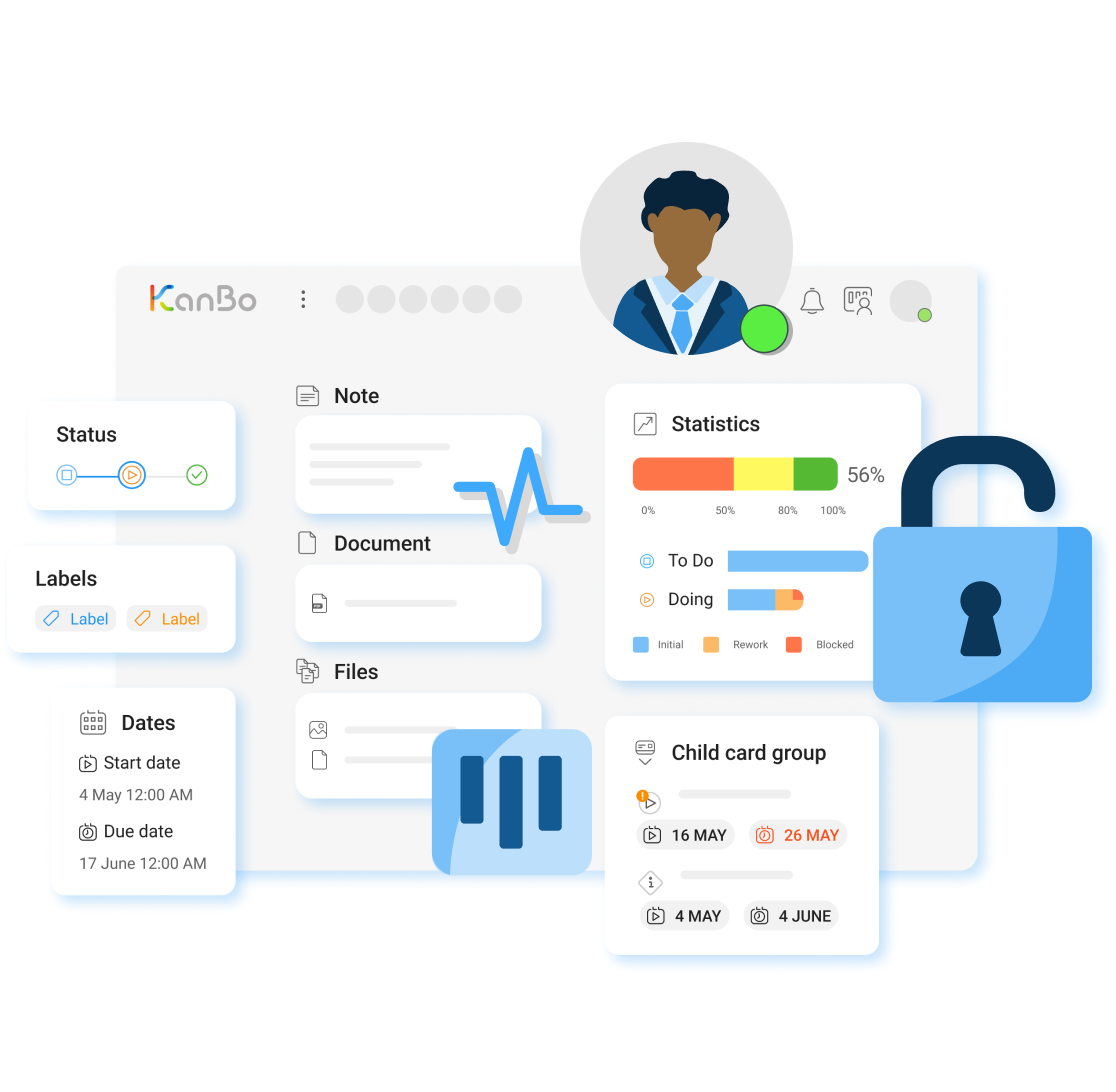
Enterprise capabilities for controlled work coordination
Large organizations rarely fail at coordination because people lack tools. They fail because every team builds its own structure, its own naming, its own definition of "done" — and nobody can aggregate the result. Control is then reimposed late, through reporting requests, spreadsheets, and meetings. KanBo moves that control forward. Governance is expressed in the structure of the work itself: who can see and do what, which templates encode the approved way of working, how long information lives, and what evidence remains afterwards. Teams get flexible spaces for execution. The organization gets consistent structure, controlled access, standardized processes, lifecycle rules, and a factual view of how the platform is actually being used.
Manager's question
Can teams create and run their own work environments without the organization losing control of access and structure?
KanBo lets organizations define structured work environments up front: workspaces and spaces with predefined structure, roles, and access rules. Permissions run across six levels — none, reader, visitor, member, owner, and super — and can be granted to groups rather than individuals, with groups able to contain other groups, so access mirrors the real organizational structure instead of a flat membership list. Access does not have to be re-granted space by space. Permissions can inherit from the workspace above, while individual spaces can still be set as private or shared, and can be closed, open to self-join, or open by request. Seats are separate from permissions: a Writer seat is for people who produce work, a Reader seat for the much larger stakeholder audience that only needs visibility. This is close to Elinor Ostrom's Nobel-recognized finding on governing shared resources. Ostrom showed that durable governance of a commons does not come from central command or from no rules at all, but from clear boundaries, rules matched to local conditions, and the ability of the people involved to shape them. A KanBo workspace works the same way: the boundary and the rules are explicit, and the team operates freely inside them.
Benefit: faster setup, consistent structure, controlled access, and less uncontrolled workspace growth.
Manager's question
Is our approved way of working actually being used, or is every team rebuilding it from memory?
KanBo standardizes repeatable work through reusable space templates, card templates, document templates, and document folder rules that build the required folder structure automatically when a card is created. A project initiation, an audit, a vendor onboarding, or a regulated change process can be defined once and made available across the enterprise. The detail that matters for governance is how documents behave when a template is applied. Each template can copy documents into the new location, attach them by reference, or leave them alone — the difference between "every project gets its own working copy" and "every project points at the one master version." At enterprise scale, applying a large template runs as a tracked task with visible progress, not an instant and invisible action. Herbert Simon's Nobel-recognized work on bounded rationality explains why this matters. Organizations do not out-think complexity with more analysis; they cope with it through routines that make the next step obvious without reopening every decision. Templates are those routines, made explicit and reusable rather than living in the heads of experienced people.
Benefit: best practices are reused instead of recreated, and compliance-relevant steps are built into the structure rather than remembered.
Manager's question
Six months from now, will anyone be able to tell which version, which space, and which decision was the real one?
KanBo keeps work information under structured control across its whole life. Cards and spaces can be archived in bulk rather than one at a time, spaces can be closed and reopened, and documents stay connected to the work through managed document sources — including a repair path for the everyday reality of libraries being moved or renamed. For evidence, the record is the activity history read together with the work's own structure. Every card and every space carries a chronological account of what changed and who changed it, and that account sits directly beside the card's relations — its parent, its children, its predecessors and successors, including the ones in other spaces. A frozen copy would show what a project looked like; the connected record shows why it looked that way: which predecessor ran late, which blocker was open, who owned it, and what moved once it cleared. Blockers themselves carry a name, a reason, and a responsible owner, so organizational friction stays on the record instead of disappearing into a comment thread. George Akerlof's Nobel-recognized analysis of information quality is the useful frame here. Akerlof showed that when participants cannot distinguish good quality from bad, the good is driven out and trust in the whole market collapses. Organizational information degrades the same way: once people cannot tell which document or space is current, they stop trusting all of them and quietly rebuild private copies. Lifecycle control is what prevents that.
Benefit: better governance, lower information risk, and a work record that stays trustworthy over time.
Manager's question
Do we know where the platform is genuinely working, or are we managing the rollout by anecdote?
KanBo records what actually happens: activity streams at card, space, and user level, space progress and analytics, notification and observation patterns, and where and when people were last active. Leaders can see which structures are adopted, which spaces are alive, where work is moving, and where a team has quietly gone back to email. Because statuses in KanBo are defined by each space but anchored to fixed status roles, this visibility survives local vocabulary. A team can run its own workflow names while progress, completion, and rollups still aggregate correctly at the level above. Adoption evidence and operational reporting come from the same record — no parallel measurement exercise. Daniel Kahneman's Nobel-recognized work on judgment under uncertainty explains the risk of the alternative. Without a factual base rate, leaders substitute what is vivid and available: the loudest complaint, the last escalation, the team that presents well. Rollout decisions then follow attention rather than evidence.
Benefit: enterprise rollout becomes measurable, and support goes where it is actually needed.
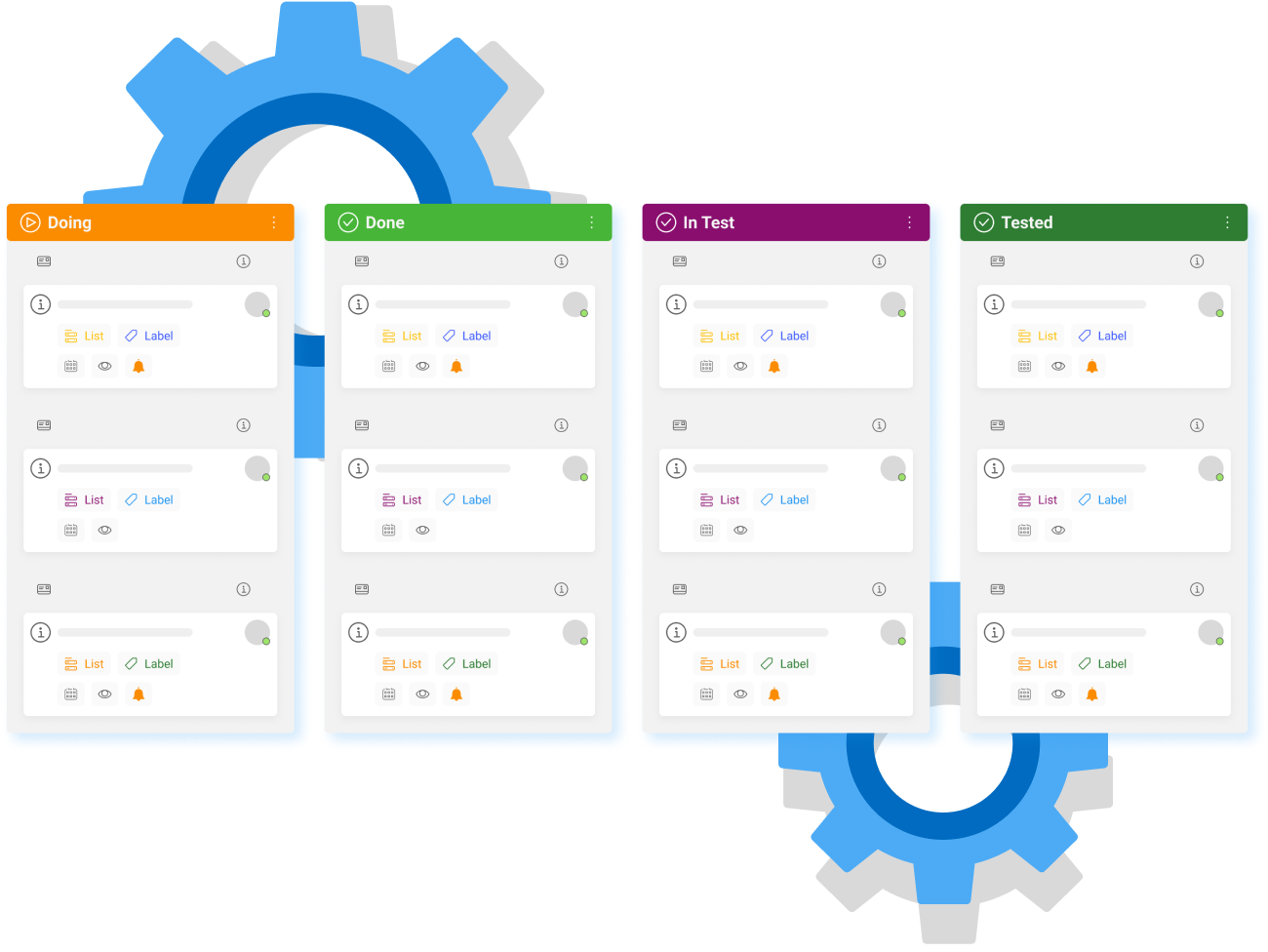
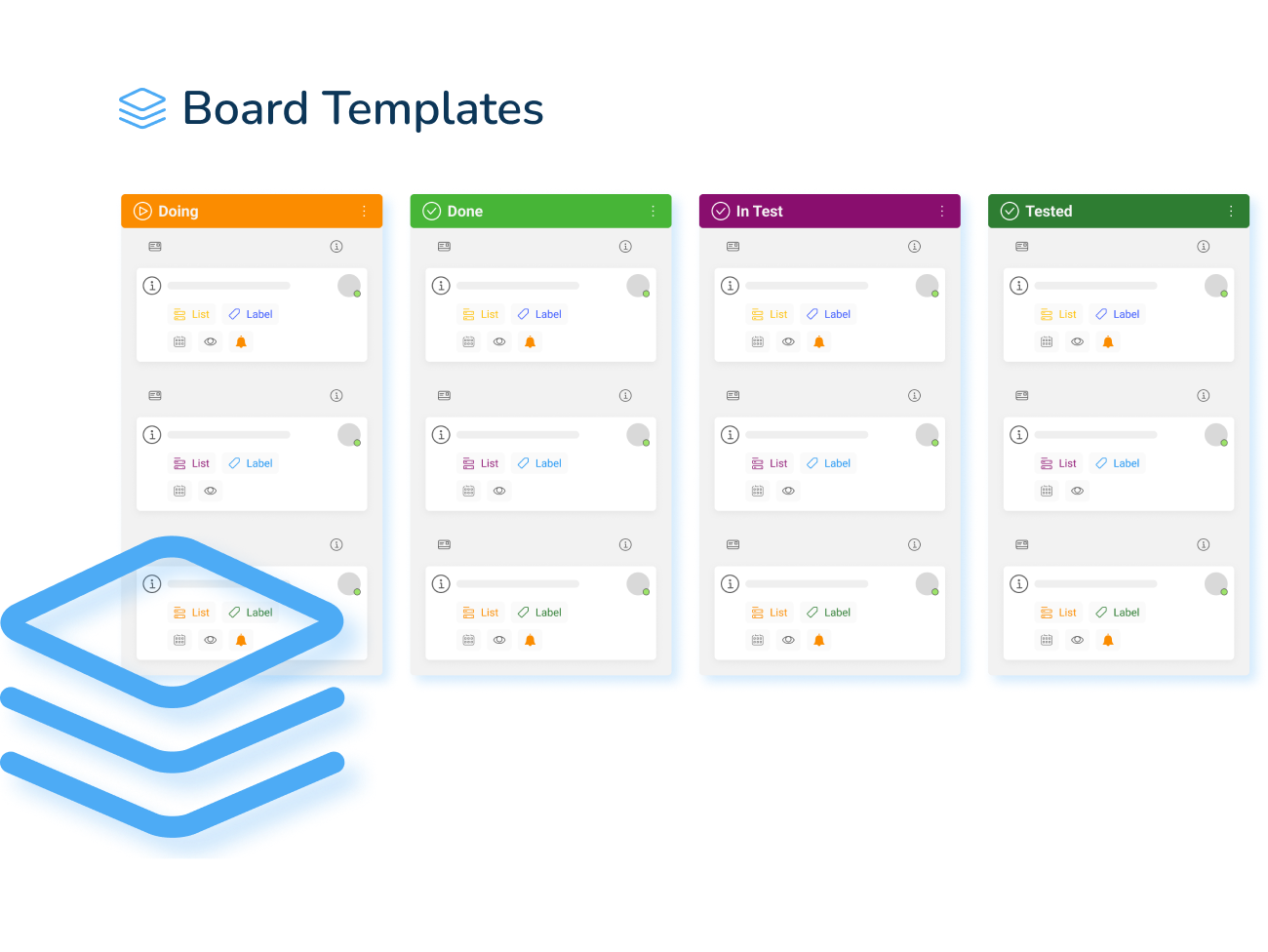
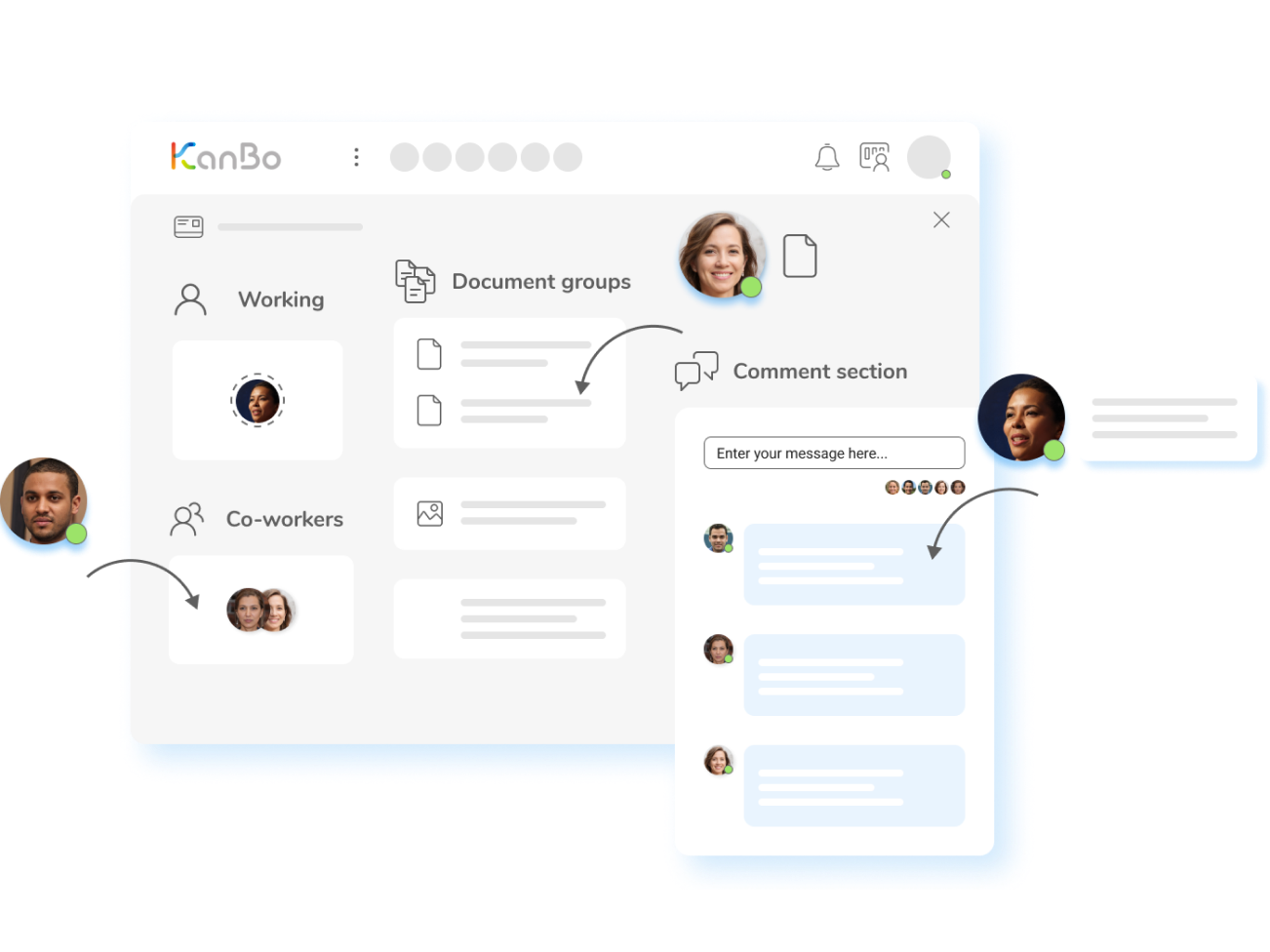
What enterprise-class looks like in daily use
Governance is only credible if it survives contact with real work. These are the views where enterprise structure becomes something an operations lead, a PMO, or an executive uses every day.

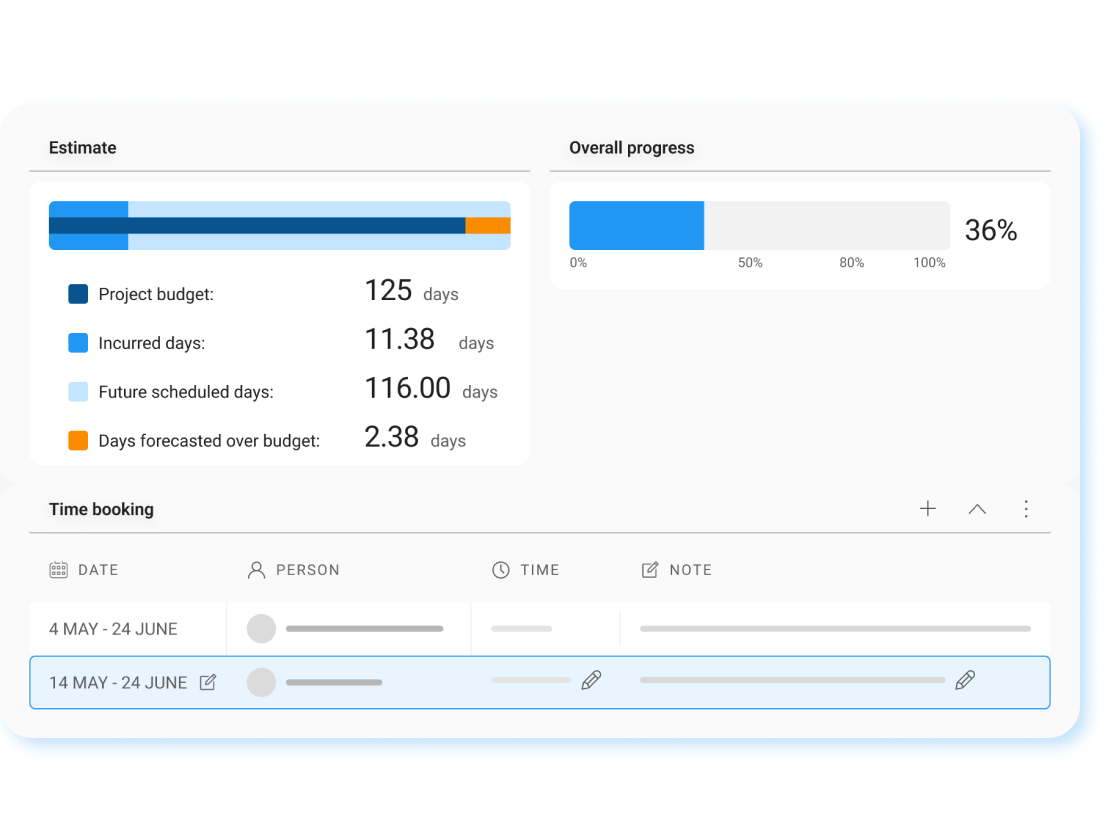
See capacity before you commit
Resources in KanBo are visible inside ordinary work views, not locked in a separate planning module. Resource and resource type are available as filters, as a Gantt column, and in the Workload view, so the question "who is already committed" is answered where the work is being planned rather than in a quarterly capacity review. For an enterprise, that changes the sequence. Capacity is checked before a commitment is made, not reconstructed after a deadline is missed.

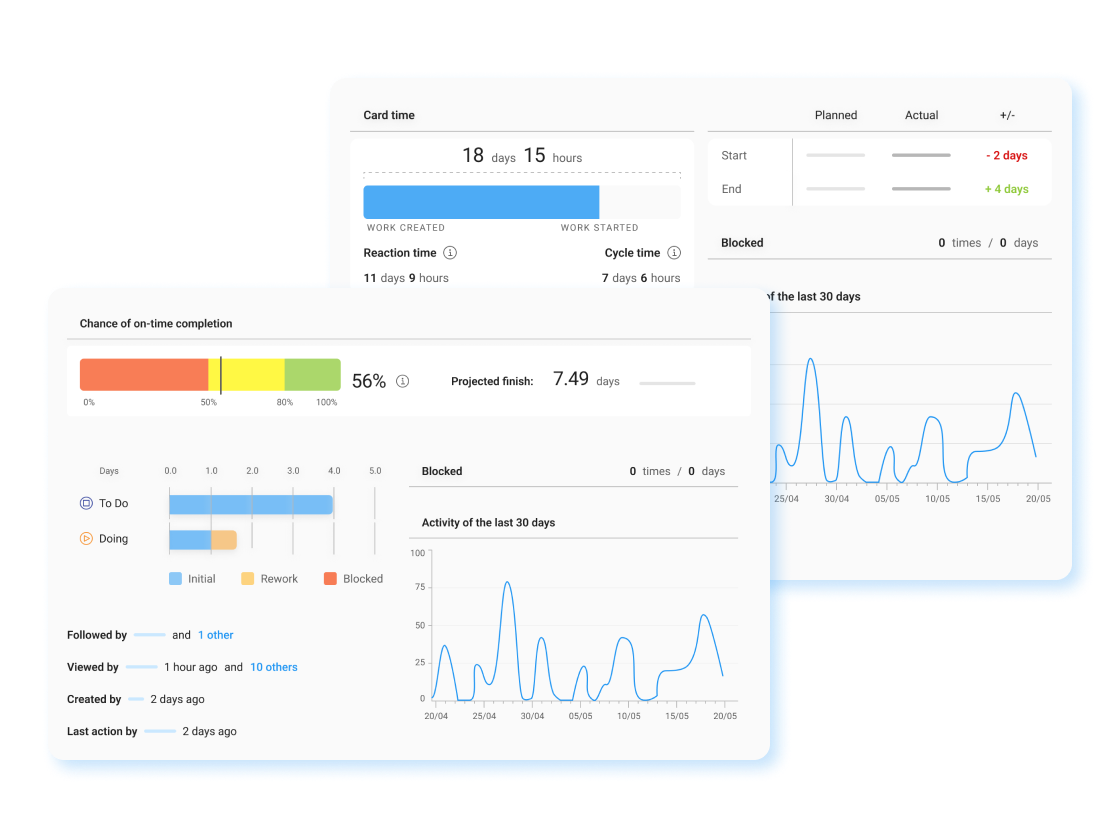
Report from the work, not about the work
Progress, status distribution, and space analytics are generated from live work items — no one compiles a status pack. The nuance that makes this work at scale: each space defines its own statuses, but every status is anchored to one of five fixed roles, so a sales space running "Prospecting → Proposal → Closed Won" and an engineering space running its own stages still roll up into the same portfolio picture. Local vocabulary stays local. Reporting integrity stays global.

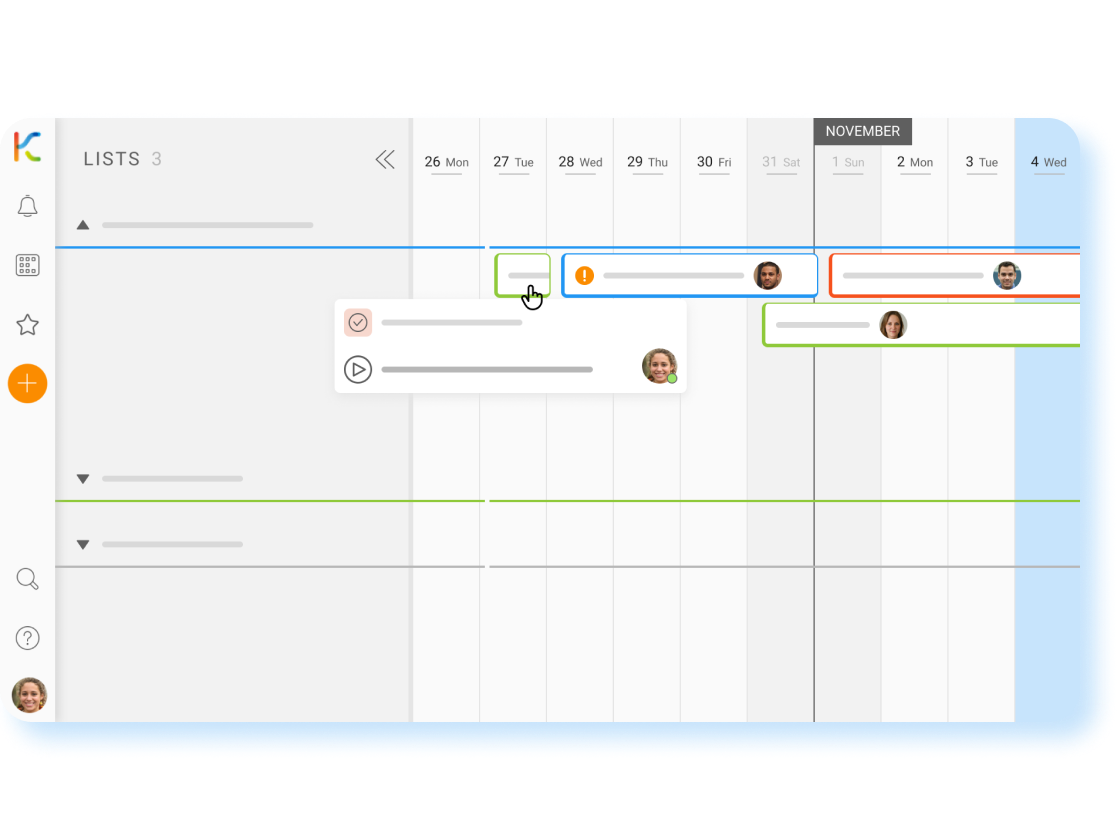
One view across many spaces
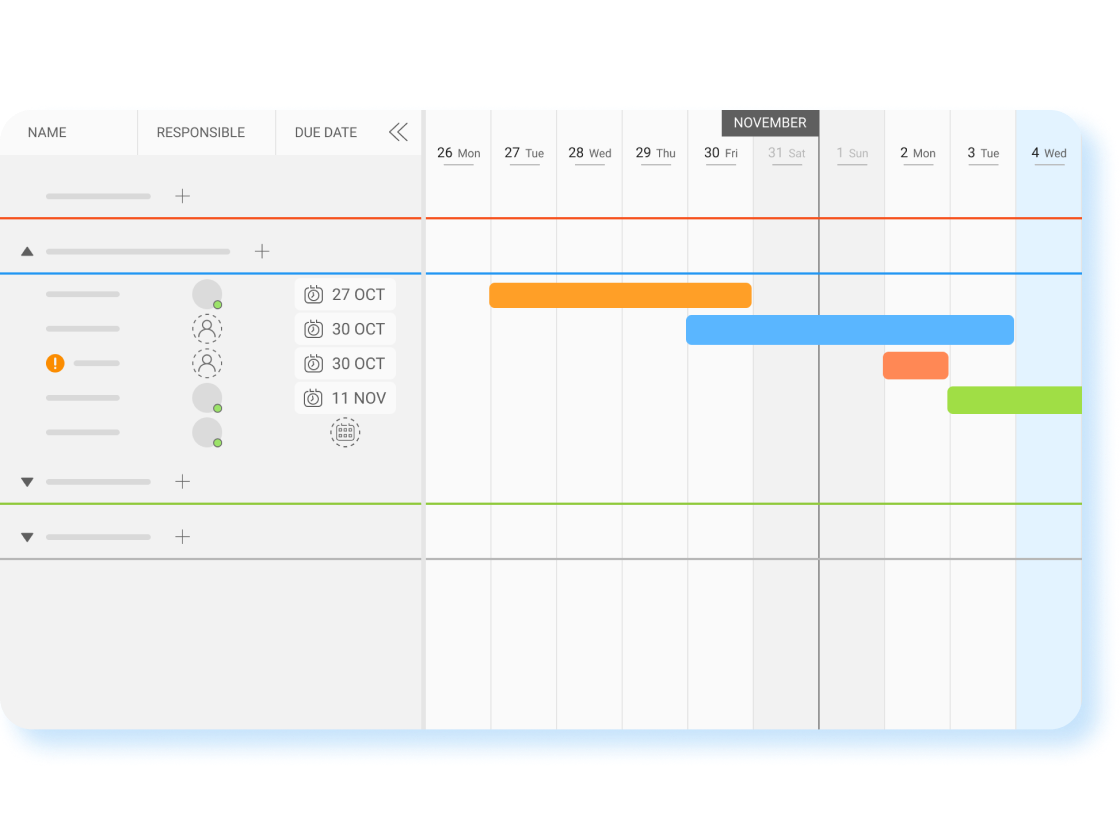
Timeline, Calendar, and Gantt views show duration, sequence, and load at day, week, or month scale, grouped and coloured to the question being asked. Because card relations have cross-space variants, a card in one space can be the predecessor of a card in another — so a portfolio timeline reflects real dependencies between departments, not a manually maintained summary. The same data serves the team's weekly planning and the executive's quarterly view. Only the altitude changes.

See what actually blocks what
KanBo continuously evaluates cards against their relations and flags conflicts by severity, from information to warning to danger. It detects eighteen distinct scheduling and dependency conflicts, including a child task scheduled to finish after its parent's deadline and a predecessor that is still incomplete. Blockers are managed objects, not comments. Each has a name, a reason, and a responsible owner, and can be defined globally so recurring organizational friction — waiting on legal review, a vendor SLA — becomes measurable across the portfolio. Blocker impact answers the question executives actually ask: if this one clears, what moves?
Get started today with
KanBo!

KanBo is a work coordination software designed to help self-organizing teams work smarter and faster. You can see KanBo in action by accessing our Sandbox demonstration environment.
Q&A

What makes KanBo enterprise-class?
Three things: structure the organization controls, evidence that survives time, and scale without architectural compromise. Access runs across six permission levels and can be granted to nested groups; approved ways of working are distributed as space, card, and document templates; work history, snapshots, and document context stay attached to the work itself; and deployment can follow the organization's own security requirements rather than the vendor's default.

How does KanBo keep control without slowing teams down?
Control is expressed in structure rather than approvals. Permissions inherit from the workspace, so access is set once instead of re-granted for every space. Templates carry the required steps into every new space automatically. Statuses are defined locally but anchored to fixed roles, so teams keep their own vocabulary while reporting still aggregates. The team's day-to-day experience is a space they can run themselves; the organization's experience is a structure it defined in advance.

How do we keep a large KanBo environment clean over time?
Through lifecycle rather than cleanup projects. Cards and spaces can be archived in bulk, spaces closed and reopened, and document sources managed and repaired when external libraries move. What remains afterwards is the connected record: activity history attached to the work itself, together with the relations and blockers that explain how it progressed. Retention and lifecycle handling are governed centrally, so the environment stays current without teams being asked to tidy up.
Enterprise Class
KanBo is an enterprise-class platform for coordinating work across teams, departments, processes, and systems. It combines flexible execution with the governance large organizations need: clear roles, structured workspaces, controlled access, document context, traceable history, reporting, and deployment options that fit enterprise security requirements. Enterprise-class does not mean more control at the cost of speed. It means the organization decides once how work should be structured, permissioned, and retained — and then teams move fast inside those boundaries instead of negotiating them again in every project. With KanBo, organizations can support self-organizing teams without losing control. Work stays transparent, responsibilities remain clear, and coordination scales from daily tasks to complex cross-functional initiatives — for the people doing the work, and for the AI assistants and agents that increasingly act alongside them.
Enterprise capabilities for controlled work coordination
Large organizations rarely fail at coordination because people lack tools. They fail because every team builds its own structure, its own naming, its own definition of "done" — and nobody can aggregate the result. Control is then reimposed late, through reporting requests, spreadsheets, and meetings. KanBo moves that control forward. Governance is expressed in the structure of the work itself: who can see and do what, which templates encode the approved way of working, how long information lives, and what evidence remains afterwards. Teams get flexible spaces for execution. The organization gets consistent structure, controlled access, standardized processes, lifecycle rules, and a factual view of how the platform is actually being used.
Manager's question
Can teams create and run their own work environments without the organization losing control of access and structure? KanBo lets organizations define structured work environments up front: workspaces and spaces with predefined structure, roles, and access rules. Permissions run across six levels — none, reader, visitor, member, owner, and super — and can be granted to groups rather than individuals, with groups able to contain other groups, so access mirrors the real organizational structure instead of a flat membership list. Access does not have to be re-granted space by space. Permissions can inherit from the workspace above, while individual spaces can still be set as private or shared, and can be closed, open to self-join, or open by request. Seats are separate from permissions: a Writer seat is for people who produce work, a Reader seat for the much larger stakeholder audience that only needs visibility. This is close to Elinor Ostrom's Nobel-recognized finding on governing shared resources. Ostrom showed that durable governance of a commons does not come from central command or from no rules at all, but from clear boundaries, rules matched to local conditions, and the ability of the people involved to shape them. A KanBo workspace works the same way: the boundary and the rules are explicit, and the team operates freely inside them.
Benefit: faster setup, consistent structure, controlled access, and less uncontrolled workspace growth.
Manager's question
Is our approved way of working actually being used, or is every team rebuilding it from memory? KanBo standardizes repeatable work through reusable space templates, card templates, document templates, and document folder rules that build the required folder structure automatically when a card is created. A project initiation, an audit, a vendor onboarding, or a regulated change process can be defined once and made available across the enterprise. The detail that matters for governance is how documents behave when a template is applied. Each template can copy documents into the new location, attach them by reference, or leave them alone — the difference between "every project gets its own working copy" and "every project points at the one master version." At enterprise scale, applying a large template runs as a tracked task with visible progress, not an instant and invisible action. Herbert Simon's Nobel-recognized work on bounded rationality explains why this matters. Organizations do not out-think complexity with more analysis; they cope with it through routines that make the next step obvious without reopening every decision. Templates are those routines, made explicit and reusable rather than living in the heads of experienced people.
Benefit: best practices are reused instead of recreated, and compliance-relevant steps are built into the structure rather than remembered.
Manager's question
Six months from now, will anyone be able to tell which version, which space, and which decision was the real one? KanBo keeps work information under structured control across its whole life. Cards and spaces can be archived in bulk rather than one at a time, spaces can be closed and reopened, and documents stay connected to the work through managed document sources — including a repair path for the everyday reality of libraries being moved or renamed. For evidence, the record is the activity history read together with the work's own structure. Every card and every space carries a chronological account of what changed and who changed it, and that account sits directly beside the card's relations — its parent, its children, its predecessors and successors, including the ones in other spaces. A frozen copy would show what a project looked like; the connected record shows why it looked that way: which predecessor ran late, which blocker was open, who owned it, and what moved once it cleared. Blockers themselves carry a name, a reason, and a responsible owner, so organizational friction stays on the record instead of disappearing into a comment thread. George Akerlof's Nobel-recognized analysis of information quality is the useful frame here. Akerlof showed that when participants cannot distinguish good quality from bad, the good is driven out and trust in the whole market collapses. Organizational information degrades the same way: once people cannot tell which document or space is current, they stop trusting all of them and quietly rebuild private copies. Lifecycle control is what prevents that.
Benefit: better governance, lower information risk, and a work record that stays trustworthy over time.
Manager's question
Do we know where the platform is genuinely working, or are we managing the rollout by anecdote? KanBo records what actually happens: activity streams at card, space, and user level, space progress and analytics, notification and observation patterns, and where and when people were last active. Leaders can see which structures are adopted, which spaces are alive, where work is moving, and where a team has quietly gone back to email. Because statuses in KanBo are defined by each space but anchored to fixed status roles, this visibility survives local vocabulary. A team can run its own workflow names while progress, completion, and rollups still aggregate correctly at the level above. Adoption evidence and operational reporting come from the same record — no parallel measurement exercise. Daniel Kahneman's Nobel-recognized work on judgment under uncertainty explains the risk of the alternative. Without a factual base rate, leaders substitute what is vivid and available: the loudest complaint, the last escalation, the team that presents well. Rollout decisions then follow attention rather than evidence.
Benefit: enterprise rollout becomes measurable, and support goes where it is actually needed.
What enterprise-class looks like in daily use
Governance is only credible if it survives contact with real work. These are the views where enterprise structure becomes something an operations lead, a PMO, or an executive uses every day.
See capacity before you commit
Resources in KanBo are visible inside ordinary work views, not locked in a separate planning module. Resource and resource type are available as filters, as a Gantt column, and in the Workload view, so the question "who is already committed" is answered where the work is being planned rather than in a quarterly capacity review. For an enterprise, that changes the sequence. Capacity is checked before a commitment is made, not reconstructed after a deadline is missed.
Report from the work, not about the work
Progress, status distribution, and space analytics are generated from live work items — no one compiles a status pack. The nuance that makes this work at scale: each space defines its own statuses, but every status is anchored to one of five fixed roles, so a sales space running "Prospecting → Proposal → Closed Won" and an engineering space running its own stages still roll up into the same portfolio picture. Local vocabulary stays local. Reporting integrity stays global.
One view across many spaces
Timeline, Calendar, and Gantt views show duration, sequence, and load at day, week, or month scale, grouped and coloured to the question being asked. Because card relations have cross-space variants, a card in one space can be the predecessor of a card in another — so a portfolio timeline reflects real dependencies between departments, not a manually maintained summary. The same data serves the team's weekly planning and the executive's quarterly view. Only the altitude changes.
See what actually blocks what
KanBo continuously evaluates cards against their relations and flags conflicts by severity, from information to warning to danger. It detects eighteen distinct scheduling and dependency conflicts, including a child task scheduled to finish after its parent's deadline and a predecessor that is still incomplete. Blockers are managed objects, not comments. Each has a name, a reason, and a responsible owner, and can be defined globally so recurring organizational friction — waiting on legal review, a vendor SLA — becomes measurable across the portfolio. Blocker impact answers the question executives actually ask: if this one clears, what moves?
Get started today with KanBo!
KanBo is a work coordination software designed to help self-organizing teams work smarter and faster. You can see KanBo in action by accessing our Sandbox demonstration environment.
Q&A
What makes KanBo enterprise-class?
Three things: structure the organization controls, evidence that survives time, and scale without architectural compromise. Access runs across six permission levels and can be granted to nested groups; approved ways of working are distributed as space, card, and document templates; work history, snapshots, and document context stay attached to the work itself; and deployment can follow the organization's own security requirements rather than the vendor's default.
How does KanBo keep control without slowing teams down?
Control is expressed in structure rather than approvals. Permissions inherit from the workspace, so access is set once instead of re-granted for every space. Templates carry the required steps into every new space automatically. Statuses are defined locally but anchored to fixed roles, so teams keep their own vocabulary while reporting still aggregates. The team's day-to-day experience is a space they can run themselves; the organization's experience is a structure it defined in advance.
How do we keep a large KanBo environment clean over time?
Through lifecycle rather than cleanup projects. Cards and spaces can be archived in bulk, spaces closed and reopened, and document sources managed and repaired when external libraries move. What remains afterwards is the connected record: activity history attached to the work itself, together with the relations and blockers that explain how it progressed. Retention and lifecycle handling are governed centrally, so the environment stays current without teams being asked to tidy up.
Enterprise Class
KanBo is an enterprise-class platform for coordinating work across teams, departments, processes, and systems. It combines flexible execution with the governance large organizations need: clear roles, structured workspaces, controlled access, document context, traceable history, reporting, and deployment options that fit enterprise security requirements. Enterprise-class does not mean more control at the cost of speed. It means the organization decides once how work should be structured, permissioned, and retained — and then teams move fast inside those boundaries instead of negotiating them again in every project. With KanBo, organizations can support self-organizing teams without losing control. Work stays transparent, responsibilities remain clear, and coordination scales from daily tasks to complex cross-functional initiatives — for the people doing the work, and for the AI assistants and agents that increasingly act alongside them.
Enterprise capabilities for controlled work coordination
Large organizations rarely fail at coordination because people lack tools. They fail because every team builds its own structure, its own naming, its own definition of "done" — and nobody can aggregate the result. Control is then reimposed late, through reporting requests, spreadsheets, and meetings. KanBo moves that control forward. Governance is expressed in the structure of the work itself: who can see and do what, which templates encode the approved way of working, how long information lives, and what evidence remains afterwards. Teams get flexible spaces for execution. The organization gets consistent structure, controlled access, standardized processes, lifecycle rules, and a factual view of how the platform is actually being used.
Manager's question
Can teams create and run their own work environments without the organization losing control of access and structure? KanBo lets organizations define structured work environments up front: workspaces and spaces with predefined structure, roles, and access rules. Permissions run across six levels — none, reader, visitor, member, owner, and super — and can be granted to groups rather than individuals, with groups able to contain other groups, so access mirrors the real organizational structure instead of a flat membership list. Access does not have to be re-granted space by space. Permissions can inherit from the workspace above, while individual spaces can still be set as private or shared, and can be closed, open to self-join, or open by request. Seats are separate from permissions: a Writer seat is for people who produce work, a Reader seat for the much larger stakeholder audience that only needs visibility. This is close to Elinor Ostrom's Nobel-recognized finding on governing shared resources. Ostrom showed that durable governance of a commons does not come from central command or from no rules at all, but from clear boundaries, rules matched to local conditions, and the ability of the people involved to shape them. A KanBo workspace works the same way: the boundary and the rules are explicit, and the team operates freely inside them.
Benefit: faster setup, consistent structure, controlled access, and less uncontrolled workspace growth.
Manager's question
Is our approved way of working actually being used, or is every team rebuilding it from memory? KanBo standardizes repeatable work through reusable space templates, card templates, document templates, and document folder rules that build the required folder structure automatically when a card is created. A project initiation, an audit, a vendor onboarding, or a regulated change process can be defined once and made available across the enterprise. The detail that matters for governance is how documents behave when a template is applied. Each template can copy documents into the new location, attach them by reference, or leave them alone — the difference between "every project gets its own working copy" and "every project points at the one master version." At enterprise scale, applying a large template runs as a tracked task with visible progress, not an instant and invisible action. Herbert Simon's Nobel-recognized work on bounded rationality explains why this matters. Organizations do not out-think complexity with more analysis; they cope with it through routines that make the next step obvious without reopening every decision. Templates are those routines, made explicit and reusable rather than living in the heads of experienced people.
Benefit: best practices are reused instead of recreated, and compliance-relevant steps are built into the structure rather than remembered.
Manager's question
Six months from now, will anyone be able to tell which version, which space, and which decision was the real one? KanBo keeps work information under structured control across its whole life. Cards and spaces can be archived in bulk rather than one at a time, spaces can be closed and reopened, and documents stay connected to the work through managed document sources — including a repair path for the everyday reality of libraries being moved or renamed. For evidence, the record is the activity history read together with the work's own structure. Every card and every space carries a chronological account of what changed and who changed it, and that account sits directly beside the card's relations — its parent, its children, its predecessors and successors, including the ones in other spaces. A frozen copy would show what a project looked like; the connected record shows why it looked that way: which predecessor ran late, which blocker was open, who owned it, and what moved once it cleared. Blockers themselves carry a name, a reason, and a responsible owner, so organizational friction stays on the record instead of disappearing into a comment thread. George Akerlof's Nobel-recognized analysis of information quality is the useful frame here. Akerlof showed that when participants cannot distinguish good quality from bad, the good is driven out and trust in the whole market collapses. Organizational information degrades the same way: once people cannot tell which document or space is current, they stop trusting all of them and quietly rebuild private copies. Lifecycle control is what prevents that.
Benefit: better governance, lower information risk, and a work record that stays trustworthy over time.
Manager's question
Do we know where the platform is genuinely working, or are we managing the rollout by anecdote? KanBo records what actually happens: activity streams at card, space, and user level, space progress and analytics, notification and observation patterns, and where and when people were last active. Leaders can see which structures are adopted, which spaces are alive, where work is moving, and where a team has quietly gone back to email. Because statuses in KanBo are defined by each space but anchored to fixed status roles, this visibility survives local vocabulary. A team can run its own workflow names while progress, completion, and rollups still aggregate correctly at the level above. Adoption evidence and operational reporting come from the same record — no parallel measurement exercise. Daniel Kahneman's Nobel-recognized work on judgment under uncertainty explains the risk of the alternative. Without a factual base rate, leaders substitute what is vivid and available: the loudest complaint, the last escalation, the team that presents well. Rollout decisions then follow attention rather than evidence.
Benefit: enterprise rollout becomes measurable, and support goes where it is actually needed.
What enterprise-class looks like in daily use
Governance is only credible if it survives contact with real work. These are the views where enterprise structure becomes something an operations lead, a PMO, or an executive uses every day.
See capacity before you commit
Resources in KanBo are visible inside ordinary work views, not locked in a separate planning module. Resource and resource type are available as filters, as a Gantt column, and in the Workload view, so the question "who is already committed" is answered where the work is being planned rather than in a quarterly capacity review. For an enterprise, that changes the sequence. Capacity is checked before a commitment is made, not reconstructed after a deadline is missed.
Report from the work, not about the work
Progress, status distribution, and space analytics are generated from live work items — no one compiles a status pack. The nuance that makes this work at scale: each space defines its own statuses, but every status is anchored to one of five fixed roles, so a sales space running "Prospecting → Proposal → Closed Won" and an engineering space running its own stages still roll up into the same portfolio picture. Local vocabulary stays local. Reporting integrity stays global.
One view across many spaces
Timeline, Calendar, and Gantt views show duration, sequence, and load at day, week, or month scale, grouped and coloured to the question being asked. Because card relations have cross-space variants, a card in one space can be the predecessor of a card in another — so a portfolio timeline reflects real dependencies between departments, not a manually maintained summary. The same data serves the team's weekly planning and the executive's quarterly view. Only the altitude changes.
See what actually blocks what
KanBo continuously evaluates cards against their relations and flags conflicts by severity, from information to warning to danger. It detects eighteen distinct scheduling and dependency conflicts, including a child task scheduled to finish after its parent's deadline and a predecessor that is still incomplete. Blockers are managed objects, not comments. Each has a name, a reason, and a responsible owner, and can be defined globally so recurring organizational friction — waiting on legal review, a vendor SLA — becomes measurable across the portfolio. Blocker impact answers the question executives actually ask: if this one clears, what moves?
Get started today with KanBo!
KanBo is a work coordination software designed to help self-organizing teams work smarter and faster. You can see KanBo in action by accessing our Sandbox demonstration environment.
Q&A
What makes KanBo enterprise-class?
Three things: structure the organization controls, evidence that survives time, and scale without architectural compromise. Access runs across six permission levels and can be granted to nested groups; approved ways of working are distributed as space, card, and document templates; work history, snapshots, and document context stay attached to the work itself; and deployment can follow the organization's own security requirements rather than the vendor's default.
How does KanBo keep control without slowing teams down?
Control is expressed in structure rather than approvals. Permissions inherit from the workspace, so access is set once instead of re-granted for every space. Templates carry the required steps into every new space automatically. Statuses are defined locally but anchored to fixed roles, so teams keep their own vocabulary while reporting still aggregates. The team's day-to-day experience is a space they can run themselves; the organization's experience is a structure it defined in advance.
How do we keep a large KanBo environment clean over time?
Through lifecycle rather than cleanup projects. Cards and spaces can be archived in bulk, spaces closed and reopened, and document sources managed and repaired when external libraries move. What remains afterwards is the connected record: activity history attached to the work itself, together with the relations and blockers that explain how it progressed. Retention and lifecycle handling are governed centrally, so the environment stays current without teams being asked to tidy up.
Enterprise Class
KanBo is an enterprise-class platform for coordinating work across teams, departments, processes, and systems. It combines flexible execution with the governance large organizations need: clear roles, structured workspaces, controlled access, document context, traceable history, reporting, and deployment options that fit enterprise security requirements. Enterprise-class does not mean more control at the cost of speed. It means the organization decides once how work should be structured, permissioned, and retained — and then teams move fast inside those boundaries instead of negotiating them again in every project. With KanBo, organizations can support self-organizing teams without losing control. Work stays transparent, responsibilities remain clear, and coordination scales from daily tasks to complex cross-functional initiatives — for the people doing the work, and for the AI assistants and agents that increasingly act alongside them.
Enterprise capabilities for controlled work coordination
Large organizations rarely fail at coordination because people lack tools. They fail because every team builds its own structure, its own naming, its own definition of "done" — and nobody can aggregate the result. Control is then reimposed late, through reporting requests, spreadsheets, and meetings. KanBo moves that control forward. Governance is expressed in the structure of the work itself: who can see and do what, which templates encode the approved way of working, how long information lives, and what evidence remains afterwards. Teams get flexible spaces for execution. The organization gets consistent structure, controlled access, standardized processes, lifecycle rules, and a factual view of how the platform is actually being used.
Manager's question
Can teams create and run their own work environments without the organization losing control of access and structure? KanBo lets organizations define structured work environments up front: workspaces and spaces with predefined structure, roles, and access rules. Permissions run across six levels — none, reader, visitor, member, owner, and super — and can be granted to groups rather than individuals, with groups able to contain other groups, so access mirrors the real organizational structure instead of a flat membership list. Access does not have to be re-granted space by space. Permissions can inherit from the workspace above, while individual spaces can still be set as private or shared, and can be closed, open to self-join, or open by request. Seats are separate from permissions: a Writer seat is for people who produce work, a Reader seat for the much larger stakeholder audience that only needs visibility. This is close to Elinor Ostrom's Nobel-recognized finding on governing shared resources. Ostrom showed that durable governance of a commons does not come from central command or from no rules at all, but from clear boundaries, rules matched to local conditions, and the ability of the people involved to shape them. A KanBo workspace works the same way: the boundary and the rules are explicit, and the team operates freely inside them.
Benefit: faster setup, consistent structure, controlled access, and less uncontrolled workspace growth.
Manager's question
Is our approved way of working actually being used, or is every team rebuilding it from memory? KanBo standardizes repeatable work through reusable space templates, card templates, document templates, and document folder rules that build the required folder structure automatically when a card is created. A project initiation, an audit, a vendor onboarding, or a regulated change process can be defined once and made available across the enterprise. The detail that matters for governance is how documents behave when a template is applied. Each template can copy documents into the new location, attach them by reference, or leave them alone — the difference between "every project gets its own working copy" and "every project points at the one master version." At enterprise scale, applying a large template runs as a tracked task with visible progress, not an instant and invisible action. Herbert Simon's Nobel-recognized work on bounded rationality explains why this matters. Organizations do not out-think complexity with more analysis; they cope with it through routines that make the next step obvious without reopening every decision. Templates are those routines, made explicit and reusable rather than living in the heads of experienced people.
Benefit: best practices are reused instead of recreated, and compliance-relevant steps are built into the structure rather than remembered.
Manager's question
Six months from now, will anyone be able to tell which version, which space, and which decision was the real one? KanBo keeps work information under structured control across its whole life. Cards and spaces can be archived in bulk rather than one at a time, spaces can be closed and reopened, and documents stay connected to the work through managed document sources — including a repair path for the everyday reality of libraries being moved or renamed. For evidence, the record is the activity history read together with the work's own structure. Every card and every space carries a chronological account of what changed and who changed it, and that account sits directly beside the card's relations — its parent, its children, its predecessors and successors, including the ones in other spaces. A frozen copy would show what a project looked like; the connected record shows why it looked that way: which predecessor ran late, which blocker was open, who owned it, and what moved once it cleared. Blockers themselves carry a name, a reason, and a responsible owner, so organizational friction stays on the record instead of disappearing into a comment thread. George Akerlof's Nobel-recognized analysis of information quality is the useful frame here. Akerlof showed that when participants cannot distinguish good quality from bad, the good is driven out and trust in the whole market collapses. Organizational information degrades the same way: once people cannot tell which document or space is current, they stop trusting all of them and quietly rebuild private copies. Lifecycle control is what prevents that.
Benefit: better governance, lower information risk, and a work record that stays trustworthy over time.
Manager's question
Do we know where the platform is genuinely working, or are we managing the rollout by anecdote? KanBo records what actually happens: activity streams at card, space, and user level, space progress and analytics, notification and observation patterns, and where and when people were last active. Leaders can see which structures are adopted, which spaces are alive, where work is moving, and where a team has quietly gone back to email. Because statuses in KanBo are defined by each space but anchored to fixed status roles, this visibility survives local vocabulary. A team can run its own workflow names while progress, completion, and rollups still aggregate correctly at the level above. Adoption evidence and operational reporting come from the same record — no parallel measurement exercise. Daniel Kahneman's Nobel-recognized work on judgment under uncertainty explains the risk of the alternative. Without a factual base rate, leaders substitute what is vivid and available: the loudest complaint, the last escalation, the team that presents well. Rollout decisions then follow attention rather than evidence.
Benefit: enterprise rollout becomes measurable, and support goes where it is actually needed.
What enterprise-class looks like in daily use
Governance is only credible if it survives contact with real work. These are the views where enterprise structure becomes something an operations lead, a PMO, or an executive uses every day.
See capacity before you commit
Resources in KanBo are visible inside ordinary work views, not locked in a separate planning module. Resource and resource type are available as filters, as a Gantt column, and in the Workload view, so the question "who is already committed" is answered where the work is being planned rather than in a quarterly capacity review. For an enterprise, that changes the sequence. Capacity is checked before a commitment is made, not reconstructed after a deadline is missed.
Report from the work, not about the work
Progress, status distribution, and space analytics are generated from live work items — no one compiles a status pack. The nuance that makes this work at scale: each space defines its own statuses, but every status is anchored to one of five fixed roles, so a sales space running "Prospecting → Proposal → Closed Won" and an engineering space running its own stages still roll up into the same portfolio picture. Local vocabulary stays local. Reporting integrity stays global.
One view across many spaces
Timeline, Calendar, and Gantt views show duration, sequence, and load at day, week, or month scale, grouped and coloured to the question being asked. Because card relations have cross-space variants, a card in one space can be the predecessor of a card in another — so a portfolio timeline reflects real dependencies between departments, not a manually maintained summary. The same data serves the team's weekly planning and the executive's quarterly view. Only the altitude changes.
See what actually blocks what
KanBo continuously evaluates cards against their relations and flags conflicts by severity, from information to warning to danger. It detects eighteen distinct scheduling and dependency conflicts, including a child task scheduled to finish after its parent's deadline and a predecessor that is still incomplete. Blockers are managed objects, not comments. Each has a name, a reason, and a responsible owner, and can be defined globally so recurring organizational friction — waiting on legal review, a vendor SLA — becomes measurable across the portfolio. Blocker impact answers the question executives actually ask: if this one clears, what moves?
Get started today with KanBo!
KanBo is a work coordination software designed to help self-organizing teams work smarter and faster. You can see KanBo in action by accessing our Sandbox demonstration environment.
Q&A
What makes KanBo enterprise-class?
Three things: structure the organization controls, evidence that survives time, and scale without architectural compromise. Access runs across six permission levels and can be granted to nested groups; approved ways of working are distributed as space, card, and document templates; work history, snapshots, and document context stay attached to the work itself; and deployment can follow the organization's own security requirements rather than the vendor's default.
How does KanBo keep control without slowing teams down?
Control is expressed in structure rather than approvals. Permissions inherit from the workspace, so access is set once instead of re-granted for every space. Templates carry the required steps into every new space automatically. Statuses are defined locally but anchored to fixed roles, so teams keep their own vocabulary while reporting still aggregates. The team's day-to-day experience is a space they can run themselves; the organization's experience is a structure it defined in advance.
How do we keep a large KanBo environment clean over time?
Through lifecycle rather than cleanup projects. Cards and spaces can be archived in bulk, spaces closed and reopened, and document sources managed and repaired when external libraries move. What remains afterwards is the connected record: activity history attached to the work itself, together with the relations and blockers that explain how it progressed. Retention and lifecycle handling are governed centrally, so the environment stays current without teams being asked to tidy up.