

KanBo Perspective
Real-Time Collaboration for the Construction Industry
KanBo Perspective
Real-Time Collaboration in Construction: How Work Really Moves Between People
Construction runs on questions. Does this detail match the model? Can the delivery come a day earlier? Who approved the change? Each one has to travel from someone who needs to know to someone who does, across a site, an office and a supplier’s yard, usually while everyone is busy with something else.
Real-time collaboration is the name for getting that right. It means exchanging information, and giving access to it, at the moment it is needed, with people on both sides sending and receiving. It does not mean instant, and in practice it often does not work. This article goes through what actually moves between people on a construction project, how meetings, calls, site visits, digital tools and now AI each handle it, and where each one tends to break. We build KanBo, a work coordination platform, so we care about where this breaks. KanBo is described near the end, with its limits, because a tool only makes sense once the work it serves is clear.
In short. Real-time collaboration in construction is getting the right information to the right person when they need it. A faster channel does not fix the four failures described below. What fixes them is keeping each exchange attached to the piece of work it concerns. KanBo is a work coordination platform built around that idea, and it works alongside site calls, meetings, common data environments and BIM tools rather than replacing them. None of it works unless people write the outcome down, which is the hard part of any new tool.
What does real-time collaboration mean in construction?
It is measured by need, not by the clock. A reply in ten minutes is too late for a crew that moves in five. A reply in two days is fine for a submittal that is not needed for two weeks. The test is whether the person had what they needed when they had to act.
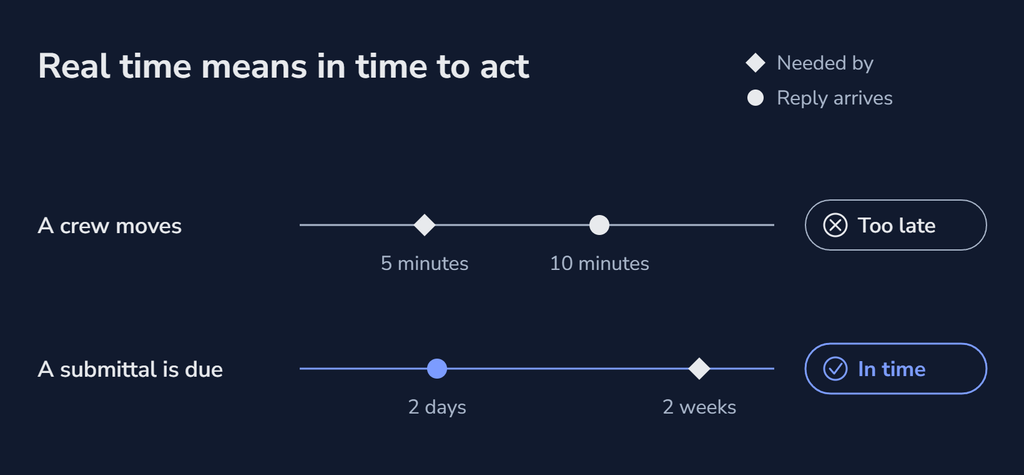
Figure 1. Real time means in time to act, not as fast as possible.
Collaboration also has two halves. One person asks, reports or hands over. Another receives, finds out or answers. Most failures sit in one half: the question never reached the person who knew, or the answer exists but the person who needs it cannot find it. Sometimes the best form of sending is not a message at all but access, which lets the other person look at the work themselves.
Today this is both easier and harder than it used to be. Internet access and digital information are standard, so almost anything can be reached by almost anyone. But the channels have multiplied: calls, messaging apps, email, model comments, logs and reports. One piece of work now leaves traces in several places, and nobody holds the whole of it.
What actually moves between people on a construction project?
Nine kinds of exchange carry most of the collaboration on a project. They look alike from a distance and behave differently up close.
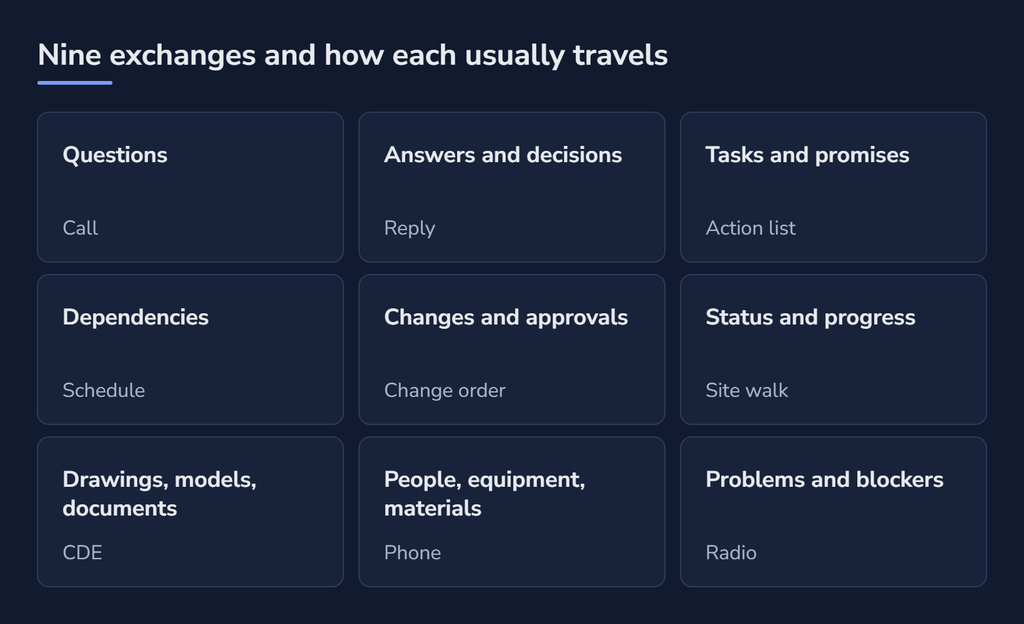
Figure 2. Nine exchanges carry most of a project’s collaboration, each by its own usual channel.
Questions
A question starts when someone cannot proceed on what they have: a detail on the drawing does not match the model, the site cannot tell which specification applies, a supplier needs a decision. Formally it becomes a request for information (RFI). Informally it is a call to the designer, a message in the team chat or a word at the morning meeting. It breaks in three ways. The question is raised in one place and answered in another. The person answering lacks the context, such as which drawing, which area and how urgent, and has to ask back. And nobody can tell whether the same question has already been asked. A review of RFI research notes that RFIs are often treated as unavoidable work that adds little value, although they can lead to schedule slippage and higher cost (Afzal, Wong and Fini, 2025).
Answers and decisions
An answer has two audiences: the person who asked, and everyone else waiting on the same thing. Usually it reaches only the first, as a reply to a call, an email or an entry in a log. Weeks later the question is why it was done this way, and the reason is in a thread, in the minutes or in one person’s memory. Each answer needs a place where the next person will look for it, and most teams have several.
Tasks and promises
Most work is handed on as a task: someone asks, someone agrees, something is expected by a date. Meetings produce action lists, foremen keep notebooks, and digital tools hold task lists and punch lists. It breaks when the agreement was verbal, when the action list is read by few, and when a promise that slips is found at the next meeting instead of on the day it slipped. Lean construction research treats this as central. Ballard and Howell (1998) took the work assignment as the basic unit of production control and argued that sound, well-sequenced, right-sized assignments shield crews from uncertainty. Macomber and Howell (2003) proposed that the purposeful ways people communicate to conceive and deliver projects belong in project management theory.
Dependencies
Dependencies are the quiet reason work stops: this cannot start until that is done, and that cannot be done until someone decides. Schedules show sequences. Look-ahead and coordination meetings bring the trades together to talk about them. The planner or the superintendent carries the rest in their head. It breaks because a schedule can show that two activities are linked without showing that the first is blocked, or by whom, so the person waiting finds out on arrival. Dependencies between companies are often held only in conversation. Coordination itself has been defined as managing dependencies between activities (Malone and Crowston, 1994).
Changes and approvals
Design changes, variations, submittals and sign-offs carry the highest stakes. The formal routes, such as change orders, transmittals and approval workflows, are slow by design. The informal shortcut, agreed on site and confirmed later, is fast and risks a later disagreement about what was agreed. It breaks when the version in the crew’s hands is not the approved one, or when approval was given and the people affected never heard. In a 2017 survey of 500 owners and contractors, three-quarters reported a dispute claim in the previous five years (Dodge Data and Analytics, 2017). The study had software-vendor support and reports what respondents said.
Status and progress
Everyone wants to know where things stand. Daily reports, progress meetings, site walks and photos answer it, and so do dashboards fed by one of the systems. It breaks because every report is a snapshot, written after the event and read later still. The site walk stays the most trusted source because the person sees the work, which also makes it the hardest to scale. The same question gets asked in several channels because people are not sure which source is current.
Drawings, models and documents
This is where access matters most. Common data environments, document management and BIM platforms hold the drawings and models. But access is not the same as awareness: someone can have access to the latest drawing and not know that it changed. Dourish and Bellotti (1992) described awareness as an understanding of what others are doing, and found that the shared work itself can supply part of it. It breaks when a change is published and the people who need to know are told in a different place from the document, or not at all.
People, equipment and materials
Who is available, which crew is where, when the crane, the pump or the delivery arrives. Coordinators answer with phone calls, whiteboards and spreadsheets, and a lot of it sits in one person’s head. It breaks when a double booking or a missing delivery shows up at seven in the morning on site, when the only speed left is the fast one.
Problems and blockers
Something stops the work: a clash found on site, missing information, a failed inspection, weather, a delivery that did not arrive. Urgent problems go by phone or radio, and they should. It breaks afterwards. The problem is rarely recorded with its reason and an owner, so the next person affected has it explained again, and nobody sees that the same problem keeps coming back.
How do meetings, calls, site visits, digital tools and AI each do the job?
No channel handles all nine exchanges. Each is good at something and costs something. The practical question is which to use for which.
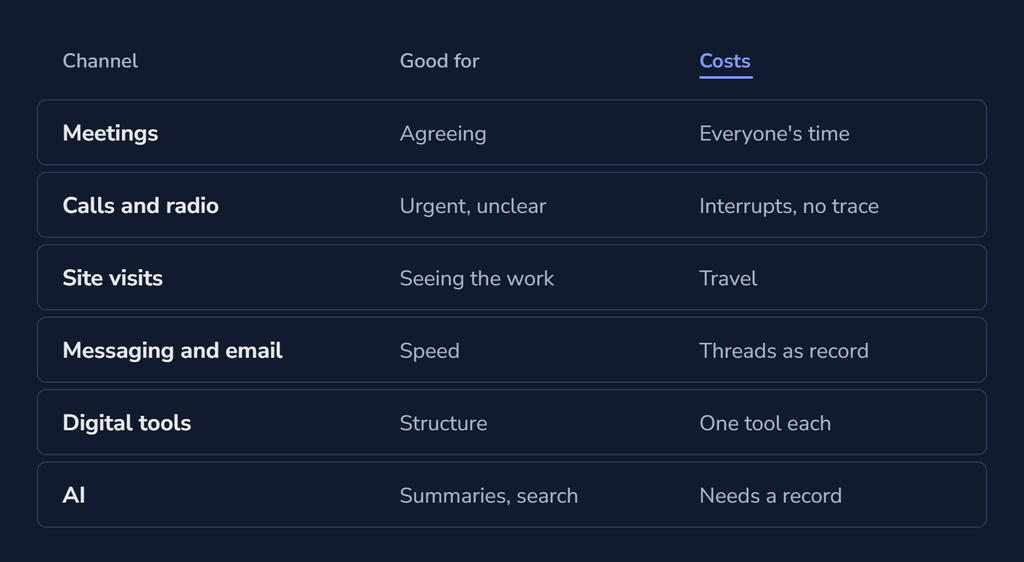
Figure 3. No channel does every job: each is good at something and costs something.
Meetings
Meetings are good for agreeing: settling a sequence, resolving a conflict between trades, building a shared view of the plan. They cost everyone’s time, and information moves only when the meeting is held, so it is as fresh as the last one. Whether the meeting leaves anything behind depends on the minutes, and on whether anyone reads them.
Phone calls and radio
Calls are the right tool when something cannot wait or when the question is unclear and needs back and forth. They settle ambiguity fast. They also interrupt: a laboratory study found that interrupted people worked faster but with more stress, frustration and effort (Mark, Gudith and Klocke, 2008). And a call leaves no trace unless somebody writes it down.
Site visits
Nothing replaces seeing the work, and a visit answers questions nobody thought to ask. It costs travel, it covers one place at a time, and what the visitor learned stays with the visitor unless it is photographed and written down.
Messaging and email
They are fast, they work across time zones and shifts, and everyone already uses them. The cost is that the thread becomes the record by accident. The same question lives in several threads, and the answer can be found only by someone who remembers who was copied.
Digital project tools
Common data environments, RFI and submittal logs, task and issue trackers, BIM issue tools and scheduling software give structure and a record. Each usually covers one kind of exchange, so one real problem ends up spread over several tools, entered more than once, and used fully by only some of the parties. The RFI review above also notes that current RFI platforms lack the analytics for efficient processing and that BIM-enabled projects add interoperability problems between software tools (Afzal, Wong and Fini, 2025).
AI
AI is the newest channel, and it arrives in a particular way: not as a new person to talk to, but as help with information already in motion. Common uses today include transcribing and summarising meetings and calls, drafting routine text such as RFIs and daily reports from notes, and searching documents and threads to answer what was decided about something. The limits are plain. AI can only work with what has been written down somewhere it can reach. Its summaries can be wrong and need checking by someone who knows the work. And it makes no call and walks no site. In practice it raises the value of a good record instead of replacing one. Research is moving in this direction: a review of 4,473 journal articles found AI research in construction growing sharply, with natural language processing one of six active areas (Pan and Zhang, 2021), and the RFI review proposes text mining of RFIs as a way forward (Afzal, Wong and Fini, 2025). Both describe where research is heading, not proven results.
Where does real-time collaboration break?
Across the nine exchanges and the channels that carry them, the same four failures keep coming back.
The right person cannot be reached when the question comes up. They are on another site, in a meeting or off shift.
The information exists, but not where the asker looks. It is in a thread, a log, a model comment or somebody’s notebook.
The answer arrives without its context, or leaves without it. The next person sees the result and not the reason.
Nobody can see what is still open. Who owns it, when it is due, what waits on it, and what changed since yesterday are held by different people.
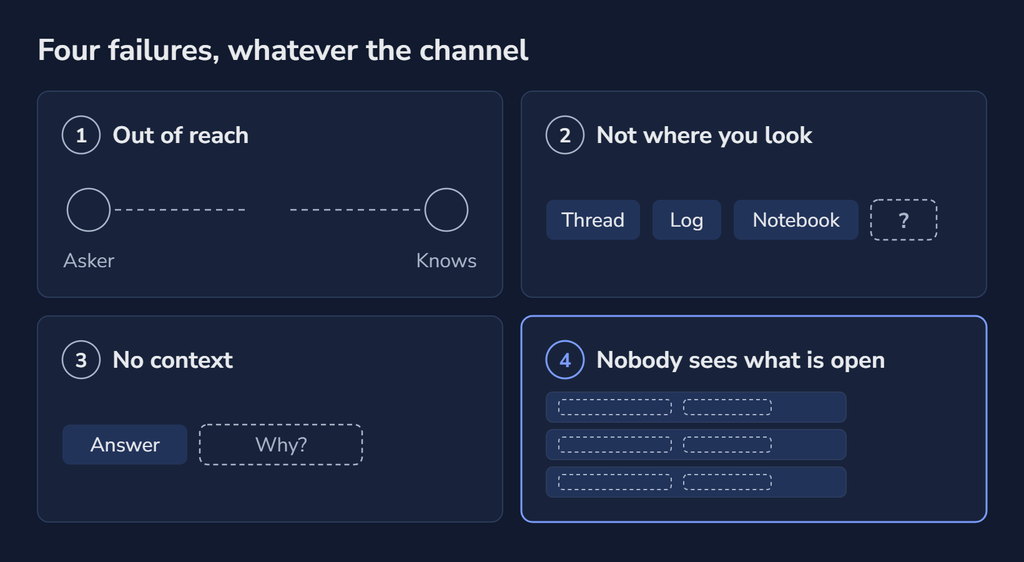
Figure 4. Four failures keep coming back, whatever the channel.
A faster channel fixes none of these on its own. It gets the message to the wrong person sooner. Research on group communication points the same way: getting information across suits less synchronous media, agreeing what it means suits more synchronous ones, and most group work needs both (Dennis, Fuller and Valacich, 2008). So the practical rule is to match the channel to the need. Call when it cannot wait or is unclear, meet to agree, visit to see, and write when others will need the answer later. Whichever channel is used, the exchange should leave a trace attached to the piece of work it concerns. That trace is what the fourth failure needs.
Why do new tools so often change so little?
Everyone on a construction project has met the tool that was going to fix communication. Most were adopted with enthusiasm and then quietly abandoned, or kept alive by one person who still updates it. That is rarely because people dislike change. It is because the tool asks someone to do extra work, at an awkward moment, for a benefit that mostly goes to somebody else.
Research on groupware and technology acceptance has made this point since the 1980s and 1990s. Grudin (1994) listed first among his challenges that the people who must enter and maintain information often get little direct return, which leads to neglect. Davis (1989) found that how useful people judge a system, and how easy they find it, predict whether they use it, with usefulness the stronger of the two.
Four things are worth expecting on a real project.
The trace is lost where the site becomes a screen. A site agreement is spoken, in gloves, in noise, sometimes where there is no signal, and not everyone has a company device. Some of it will be written later by someone else from a note or a photo, and some of it will not be written at all. The aim is to lose less, not to lose nothing.
Tools connect less cleanly than the diagrams. Syncs run on a schedule, field mappings can be wrong, and two systems can disagree about the same item. Anything that runs alongside a common data environment or a BIM platform needs an owner who checks that it still does what everyone thinks it does.
Subcontractors further down the chain may not join. Smaller second-tier and third-tier firms may have no licence, no training and no reason to use the main contractor’s platform. Their questions and promises usually keep arriving by phone, email and messaging, and somebody on the main contractor’s side has to carry them across.
Nobody is made to write. The record holds only what people put into it. Whether the habit forms is decided by site management more than by software: for example, whether a decision counts once it is on the record and not before.
What helps is modest. Start with one kind of exchange where failure is expensive and visible, such as open questions to the designer or deliveries. Make writing cheap, so that a short note, a photo or an email counts. Cheap to write is only half the point. Cheap to reuse is the other half. Give one person on each side the job of keeping the record current, instead of asking everyone to. Then look, after a few weeks, at who writes and who reads. If nobody reads, nobody will keep writing. These are practical suggestions, not research findings.
What does secure collaboration mean for construction teams?
On a construction project, secure collaboration means that the right people can see and change the right information, that people who should no longer have access lose it quickly, and that afterwards you can show who knew what and when. It depends less on the strength of any one tool than on how many companies, devices and channels the information passes through.
A project brings together an owner, designers, a main contractor, subcontractors and suppliers, many of them for months rather than years and on devices the main contractor does not control. People join in the middle and leave before the end. Much project information also travels outside any agreed system, in personal messaging, forwarded emails and screenshots. These are observations from practice, not research findings. They suggest that the risks to plan for are usually access that nobody removed and information that never entered the agreed system, more than attacks on the tool itself.
These are the questions worth asking of any collaboration tool, whichever one you choose:
- Who sees what? Can access be set per area of the project, so that a subcontractor sees their own work and not the client’s commercial discussion?
- Who joins and leaves? Can access be granted and withdrawn for a whole company or crew at once, and how long does removal take when a contract ends?
- What is on the record? Can you see who changed what and when, and show how a piece of work stood on a given date, for example in a dispute?
- Where does the data live, and who runs it? Client contracts may fix the country or the infrastructure. Ask for the supplier’s written security documentation, including hosting, encryption, backups and certifications, instead of relying on a sales page.
- How do people sign in? Company single sign-on and multi-factor authentication are better than the shared logins that are common on site.
- What can AI see? An assistant connected to the tool should read only what the person asking is allowed to read. Ask the supplier how that is enforced.
- Will people use it? A tool that is secure but avoided pushes information back into personal messaging, which is the larger exposure.
These are practical questions, not a certification checklist. On regulated or public projects, your IT and legal teams set the requirements, and the supplier’s documentation has to answer them.
Where does KanBo fit?
The exchanges above share one weakness. Sending is easy. Keeping each exchange connected to the work it is about is hard. The question lives in a call, the answer in a message, the decision in the minutes and the deadline in a schedule, and the person who needs all four has to piece them together.
KanBo is built to close that gap. Each piece of work, such as a question from site, a model issue, a delivery or a task, has one place where it lives, and what belongs to it stays attached: the person responsible, the dates, the discussion, the files, the status, and what it depends on or is blocked by. That makes KanBo both the tool people work in and the repository of what is known, always in the context of the work it concerns.
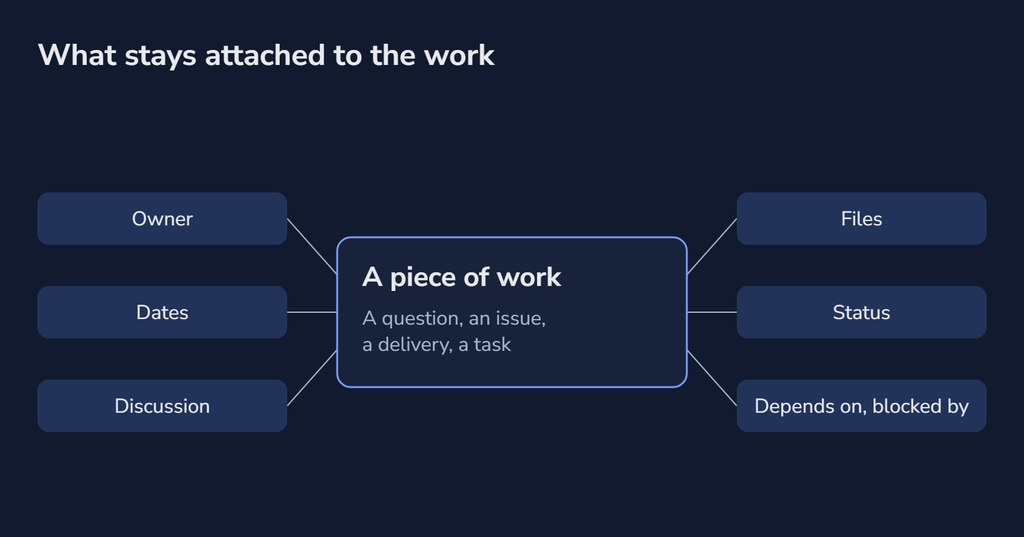
Figure 5. What belongs to a piece of work stays attached to it.
People send by writing on the work, mentioning the person they need, or emailing a request in. People receive what is flagged for them and, on opening a piece of work, see what changed since they last looked and who changed it. Access follows roles, so someone who only needs to see the work can be given a view of it rather than a copy.
Writing on a piece of work should cost about the same as sending a text message. The difference is on the receiving side. A text has to be found, read without its surroundings and matched to the job it was about, and that cost is paid again by everyone who needs it later. A line written on the work arrives already attached to what it concerns, so the next person who opens it, next week or on another shift, can use it without asking. Cheap to write is half the point. Cheap to reuse is the half that decides whether a record is worth keeping.
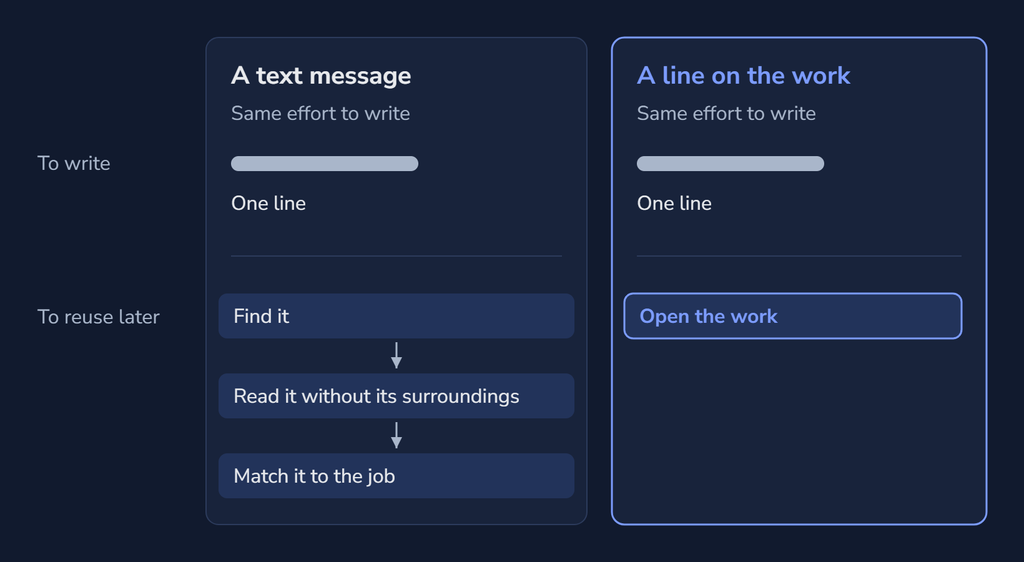
Figure 6. The effort to write is the same; the effort to reuse is not.
KanBo does not replace the exchanges that need people: the radio call, the meeting and the walk round the slab stay. What it changes is what each of them starts from and where each ends. The caller and the person on the other end can have the same piece of work open, and the outcome is written back where the next person will look. Someone still has to write it. A repository that nobody writes to holds nothing useful, and KanBo is no exception.
Figure 7. A call settles it; the outcome goes on the work for the next person.
KanBo does not remove any of the four problems above. It can lower the effort in some places: a request can arrive as an email, so nobody has to open another tool to send it, and people from other companies can be given access limited to what they need to see. Whether it works on a given site, including connectivity, devices and subcontractors, is a question to settle in a small trial before any rollout. This article makes no claim about use without a signal.
Dependencies between pieces of work can be recorded, so the person waiting can see what they are waiting for, and a blocker records what is stopping work, why and who owns it. Crews, equipment and materials can be planned as resources alongside people.
Because what is known is kept in the context of the work, an AI assistant connected to it through KanBo’s MCP interface can answer questions such as what is open and who owns it from the actual cards, instead of from guesswork. It reads what people recorded. It does not replace them recording it.
Work gets in by email to a space or card address or, for model issues, through the BIM sync, which runs periodically at a frequency your IT department sets, so it is not instant.
On access, KanBo sets permissions per workspace and space, from read-only up to owner, and permissions can be given to groups, including nested groups, so a company’s crew can be added or removed together. A space can be private or shared. Activity is recorded on each card and space, and a space can be saved as a named snapshot, which shows how it stood on a given date. Hosting options, encryption, certifications and backups are matters for KanBo’s security documentation and your own IT review. This article makes no claim about them.
KanBo works alongside your tools, not in place of them. It is not a site radio, a video-meeting tool or a common data environment, and it does not check models. Details of the BIM sync are in the KanBo Help Center and the guide to BIM workflow automation.
Questions answered
What is real-time collaboration in construction?
It is exchanging information, and giving access to it, at the moment it is needed, with people on both sides sending and receiving. The measure is whether someone had what they needed when they had to act, not how fast a message travelled.
Is real-time collaboration always better than asynchronous work?
No. Media synchronicity theory (Dennis, Fuller and Valacich, 2008) finds that getting information across works better with lower-synchronicity media, and agreeing what it means works better with higher-synchronicity ones. Most group tasks need both.
What has to move between people on a construction project?
Nine kinds of exchange carry most of it: questions, answers and decisions, tasks and promises, dependencies, changes and approvals, status and progress, drawings, models and documents, people, equipment and materials, and problems and blockers.
When should a team call, meet or visit instead of writing?
Call when something cannot wait or the question is unclear. Meet to agree something between several parties. Visit when the work has to be seen. Write when others will need the answer later. Whatever the channel, record the outcome where the next person will look.
Why does collaboration fail on construction projects?
Usually for one of four reasons: the right person cannot be reached, the information is not where the asker looks, the answer lacks its context, or nobody can see what is still open. A faster channel fixes none of these on its own.
Why do new collaboration tools often change little on construction projects?
Usually because they ask the people on site to do extra work, at an awkward moment, for a benefit that goes mainly to someone else. Research on groupware and on technology acceptance points the same way (Grudin, 1994; Davis, 1989). A tool helps when it is useful to the person who has to write in it and easy enough for them to do so.
Does collaboration reduce risk on construction projects?
Most practitioners say so. In a 2017 Dodge Data and Analytics study of 500 owners and contractors, 91% said collaboration reduces risk. A 2018 FMI survey commissioned by Autodesk linked 48% of US rework to poor project data and miscommunication. Both were supported by software companies and report opinion and attribution, not measured outcomes.
How can construction teams collaborate securely?
By controlling who sees what, withdrawing access when people leave, keeping a record of who changed what and when, and keeping project information inside the agreed tools instead of personal messaging. Ask any supplier for written security documentation, and have IT and legal check it against the project’s requirements.
Can AI help with collaboration on construction projects?
It can help with work on existing information: summarising meetings, drafting routine documents and searching documents and threads. It only works with what has been recorded, its output needs checking, and it does not replace calls, meetings or site visits.
Can KanBo keep questions, answers and tasks together?
Yes. Each piece of work has one place with its owner, dates, discussion, files, status and dependencies. Requests can arrive by email to a Space or card address, and model issues through the BIM sync, which runs periodically at a frequency your IT department sets. Calls, meetings and urgent stops stay with people. KanBo is where the outcome is recorded.
Is KanBo a good fit for construction collaboration?
It fits teams whose problem is that questions, answers, owners, dates and dependencies sit in different places and nobody can see what is still open. KanBo keeps each piece of work together with that context, takes requests by email and model issues through the BIM sync, and works alongside site calls, meetings and common data environments. It is not a site radio, a video-meeting tool, a common data environment or a model checker, and its BIM sync runs periodically rather than instantly.
Can KanBo work with subcontractors and in the field?
It can, within limits. Requests can arrive as emails, so people who will not log in can still send work in, and people from other companies can be given access limited to what they need to see. A record written after a site visit is only as complete as the person writing it, and this article makes no claim about use without a signal. Test both in a small trial.
Does KanBo replace a CDE, calls or site communication tools?
No. KanBo works alongside them. Models and documents stay in the organisation’s own repositories, and conversations that need an immediate answer stay in chat, calls or video. KanBo holds the owner, date, dependencies and history around each item.
Sources
The general points above rest on the research below. Four of the papers concern construction (Afzal and colleagues, Ballard and Howell, Macomber and Howell, Pan and Zhang). The others study communication, coordination and technology adoption in other settings, and none of the papers studied KanBo. The two industry studies are surveys supported by software companies, cited for what respondents reported.
- Afzal, M., Wong, J. K. W. and Fini, A. A. F. (2025), Towards digital approach for managing request for information (RFI) in construction projects: a literature review, Construction Innovation 25(5), 1345 to 1369.
- Ballard, G. and Howell, G. (1998), Shielding production: essential step in production control, Journal of Construction Engineering and Management 124(1).
- Davis, F. D. (1989), Perceived usefulness, perceived ease of use, and user acceptance of information technology, MIS Quarterly 13(3), 319 to 340.
- Dennis, A. R., Fuller, R. M. and Valacich, J. S. (2008), Media, tasks, and communication processes: a theory of media synchronicity, MIS Quarterly 32(3), 575 to 600.
- Dourish, P. and Bellotti, V. (1992), Awareness and coordination in shared workspaces, Proceedings of CSCW ’92.
- Grudin, J. (1994), Groupware and social dynamics: eight challenges for developers, Communications of the ACM 37(1), 92 to 105.
- Macomber, H. and Howell, G. (2003), Linguistic action: contributing to the theory of lean construction, Proceedings of the 11th Annual Conference of the International Group for Lean Construction.
- Malone, T. W. and Crowston, K. (1994), The interdisciplinary study of coordination, ACM Computing Surveys 26(1), 87 to 119.
- Mark, G., Gudith, D. and Klocke, U. (2008), The cost of interrupted work: more speed and stress, Proceedings of CHI 2008.
- Pan, Y. and Zhang, L. (2021), Roles of artificial intelligence in construction engineering and management: a critical review and future trends, Automation in Construction 122, 103517.
- Industry survey: Dodge Data report: Collaboration key to managing project risk, BuiltWorlds, 6 February 2017, on the Dodge Data and Analytics study Managing Risk in the Construction Industry.
- Industry survey: Construction Disconnected: The High Cost of Poor Data and Miscommunication, Autodesk, on the 2018 FMI report.
- Product documentation: KanBo and Autodesk BIM integration, KanBo Help Center, for the BIM sync options and behaviour.